Quotes for Stress and Depression: Short Words for Hard Moments
When life feels crowded by worry, low mood, pressure, or emotional fatigue, a few careful words can give the mind something steady to hold. Quotes for stress and depression do not replace support, treatment, rest, or problem-solving, but they can create a small pause between a hard feeling and your next step. If you are trying to understand whether your recent mood, tension, and anxiety feel heavier than usual, a private DASS-21 self-check can be one structured way to reflect on the past week. Use the quotes below as short prompts: read one slowly, notice what it brings up, and choose one gentle action that fits your day.
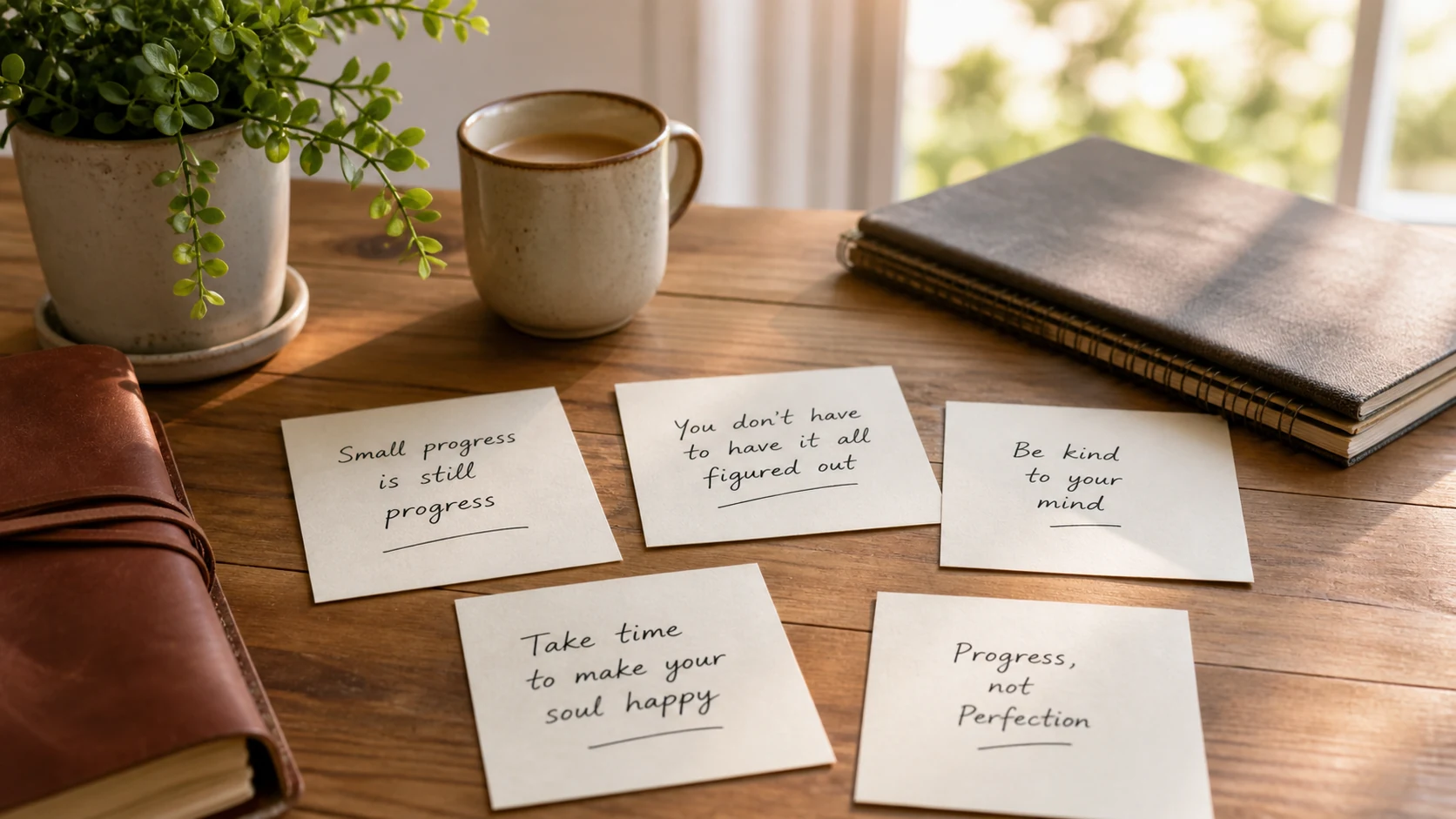
How Quotes Can Help During Stress and Low Mood
A quote is useful when it does more than sound nice. The best quote for stress gives language to a feeling, slows the pace of your thoughts, and points toward one small action. The best quote for depression is not a demand to become cheerful. It is a reminder that heaviness can be met with patience, connection, and care.
For some people, short lines work because the mind is already tired. Long advice can feel like another task. A simple sentence can be repeated while breathing, written on a note, or saved for a difficult meeting, commute, or evening. This is why short motivational quotes for depression and anxiety often perform better than dramatic speeches. They are portable.
Try using a quote in three steps:
- Read it once without trying to force a mood change.
- Ask, "What does this sentence help me name?"
- Choose one small next step, such as drinking water, texting someone safe, stretching, stepping outside, or writing one honest line.
Quotes can also help separate a feeling from an identity. "I feel overwhelmed" leaves more room than "I am failing." That small shift matters. It does not remove the pressure, but it can make the pressure easier to approach.
Positive Quotes for Depression and Anxiety
Positive quotes for depression and anxiety should be honest, not sugary. When a person is feeling flat, tense, or emotionally overloaded, forced optimism can feel dismissive. A better positive quote makes room for the hard thing and still leaves a door open.
You do not have to feel bright to take one caring step.
A quiet day can still count as a day of courage.
Healing often begins as a pause, not a performance.
Your pace can be slow and still be real.
The feeling is loud, but it is not the whole room.
Use these lines when you need permission to reduce the size of the day. A positive quote is not a command to feel happy. It is a way to remember that your current state is only one part of your experience.
If anxiety is part of the picture, pair the quote with grounding. Look for five things you can see, four things you can feel, three sounds you can hear, two things you can smell, and one thing you can taste. Then read the quote again. This turns a sentence into a practical pause instead of leaving it as decoration.
Stress Quotes Positive Enough to Use at Work or School
Stress quotes positive in tone are often most helpful when pressure is high but you still have to function. They should not pretend the workload is easy. They should help you choose the next manageable piece.
Pressure asks for everything at once; wisdom answers one piece at a time.
You can lower the noise before you solve the whole problem.
A steady breath is not a delay; it is preparation.
The next right step is smaller than the whole mountain.
You are allowed to be human while you handle hard things.
This is where structured emotional screening can support reflection after the moment has passed. A quote may help you get through a stressful hour, while a screening tool can help you notice patterns across recent days. The two serve different purposes: one offers immediate language, and the other offers a broader snapshot.
When using quotes about pressure and stress, keep them close to action. For example, after reading "The next right step is smaller than the whole mountain," write down the single next task. If the next task is still too large, divide it again. The goal is not to become perfectly calm. The goal is to make the next five minutes less tangled.

Short Stress Reliever Quotes for Quick Pauses
People often search for "my stress reliever quotes short" because they need words that fit inside a breath. These lines are intentionally brief.
Pause. Then proceed.
One breath is a beginning.
Not everything needs a response today.
Loosen your jaw. Lower your shoulders.
Small steps still move.
You can do less with more care.
This minute is not your whole life.
To relieve stress quickly, use the quote as a cue for your body. Put both feet on the floor. Exhale longer than you inhale. Drop your shoulders. Unclench your hands. Look away from the screen for a moment. These small actions are not magic, but they can interrupt the stress loop long enough for clearer thinking.
Short quotes also work well as phone lock screen notes, calendar reminders, or sticky notes. The key is to choose one line that actually feels believable to you. If "Everything will be fine" feels too far away, try "This minute is not your whole life." Believable is better than polished.
Depression Quotes That Hit Hard Without Pulling You Down
Depression quotes that hit hard often name what people have been carrying silently. The risk is that some hard-hitting quotes can deepen rumination. A useful quote should validate pain without inviting you to stay trapped inside it.
Some days, getting through the day is the work.
I miss myself, and that is a reason to be gentle.
Heavy feelings ask for care, not shame.
The quiet ache deserves language, not judgment.
Even when hope feels distant, support can still be near.
When feelings hurt, quotes can help you say the true thing without turning it into the final thing. "I miss myself" may feel accurate. Add a second sentence: "I can still offer myself care today." That pairing keeps honesty and movement together.
If low mood is intense, persistent, or affecting sleep, work, relationships, safety, or basic routines, consider speaking with a qualified mental health professional or another trusted support person. If you might hurt yourself or someone else, seek urgent local help immediately. A quote can be a bridge to support, but it should not be the only support.
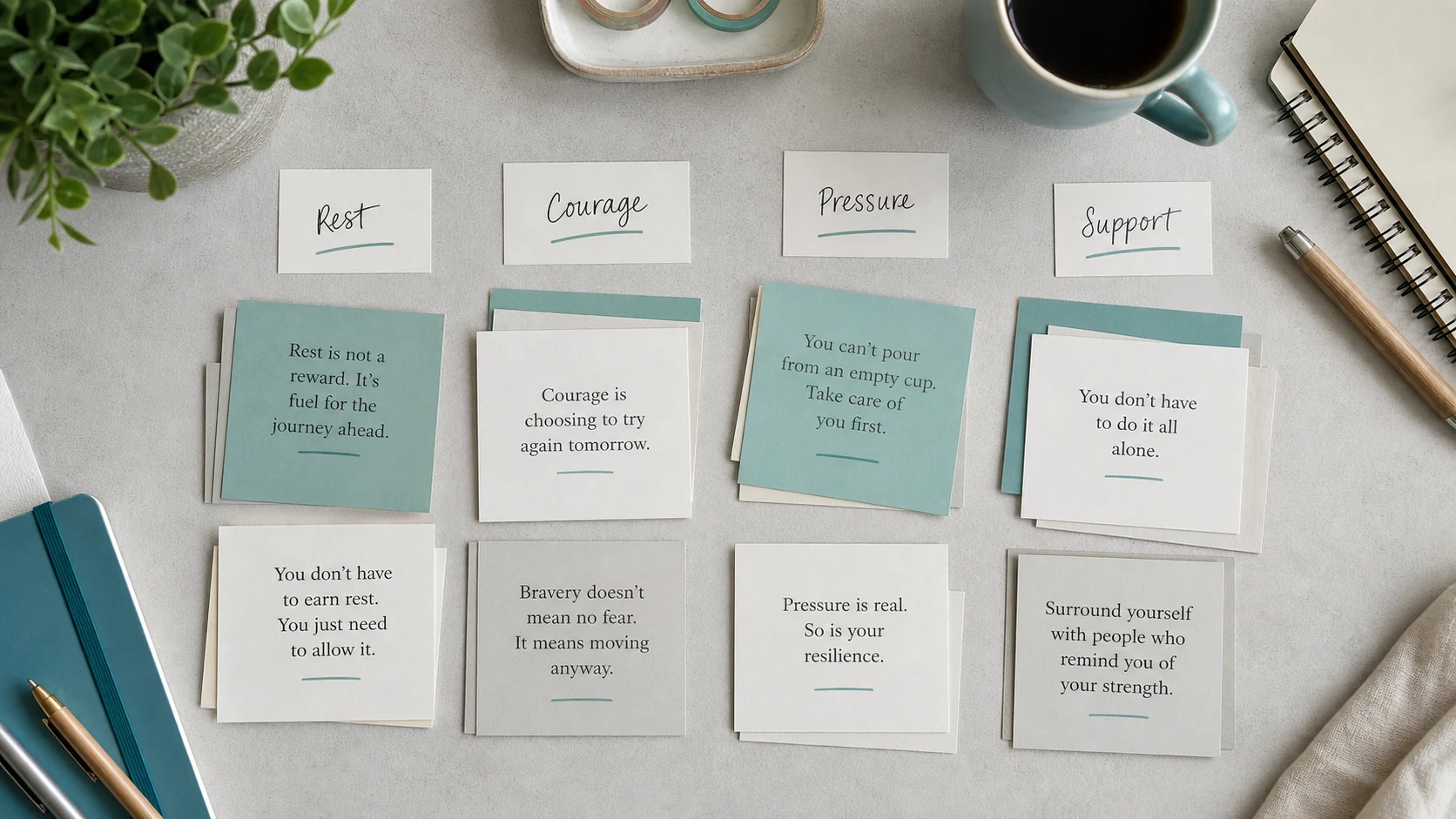
Funny Stress Relief Quotes That Still Respect the Moment
Funny stress relief quotes can help when the mood is tense but not unsafe. Humor can create distance from the pressure, especially when the joke points at the situation rather than blaming you.
My stress has requested a meeting; I declined with breathing.
Today I am managing pressure with snacks and boundaries.
My brain opened 47 tabs, and none of them are playing music.
I will solve one problem, not audition for superhero status.
The deadline is real; so is my need for water.
Funny lines are best used carefully. If you are deeply distressed, humor may feel thin or annoying. If you are mildly overwhelmed, it can soften the edge. The test is simple: after reading it, do you feel a little more spacious or a little more dismissed? Keep the quotes that create space.
Humor also pairs well with practical resets. Laugh, then do one concrete thing: close an unused tab, move a meeting, send a realistic update, or take three slow breaths. A funny quote should help you return to yourself, not pressure you to perform cheerfulness.
Stress Quotes Negative Enough to Name the Problem
Some people search for stress quotes negative in tone because positive language feels too far from their actual day. Negative quotes can be useful when they name overload clearly. They become risky when they turn pressure into hopelessness.
Compare these two styles:
Unhelpful: Nothing ever gets better.
More useful: I am overloaded, and something needs to change.
Unhelpful: I cannot handle anything.
More useful: I have been carrying too much without enough support.
The second version still tells the truth, but it leaves room for action. When writing your own quote, try this formula: "This is hard, and..." The first half validates the reality. The second half opens a next step.
Examples:
This is hard, and I can ask for one kind of help.
This is too much, and I can remove one demand.
I feel worn down, and I can stop blaming myself for needing rest.
This approach is especially helpful for quotes about stress and anxiety, because anxious pressure often speaks in absolutes. Rewriting the sentence gives your mind a more flexible frame.
How to Choose the Best Quote for Your Situation
The best quote for stress is the one that helps you regulate, not the one that sounds most impressive. The best quote for depression is the one that feels compassionate without pretending pain is simple.
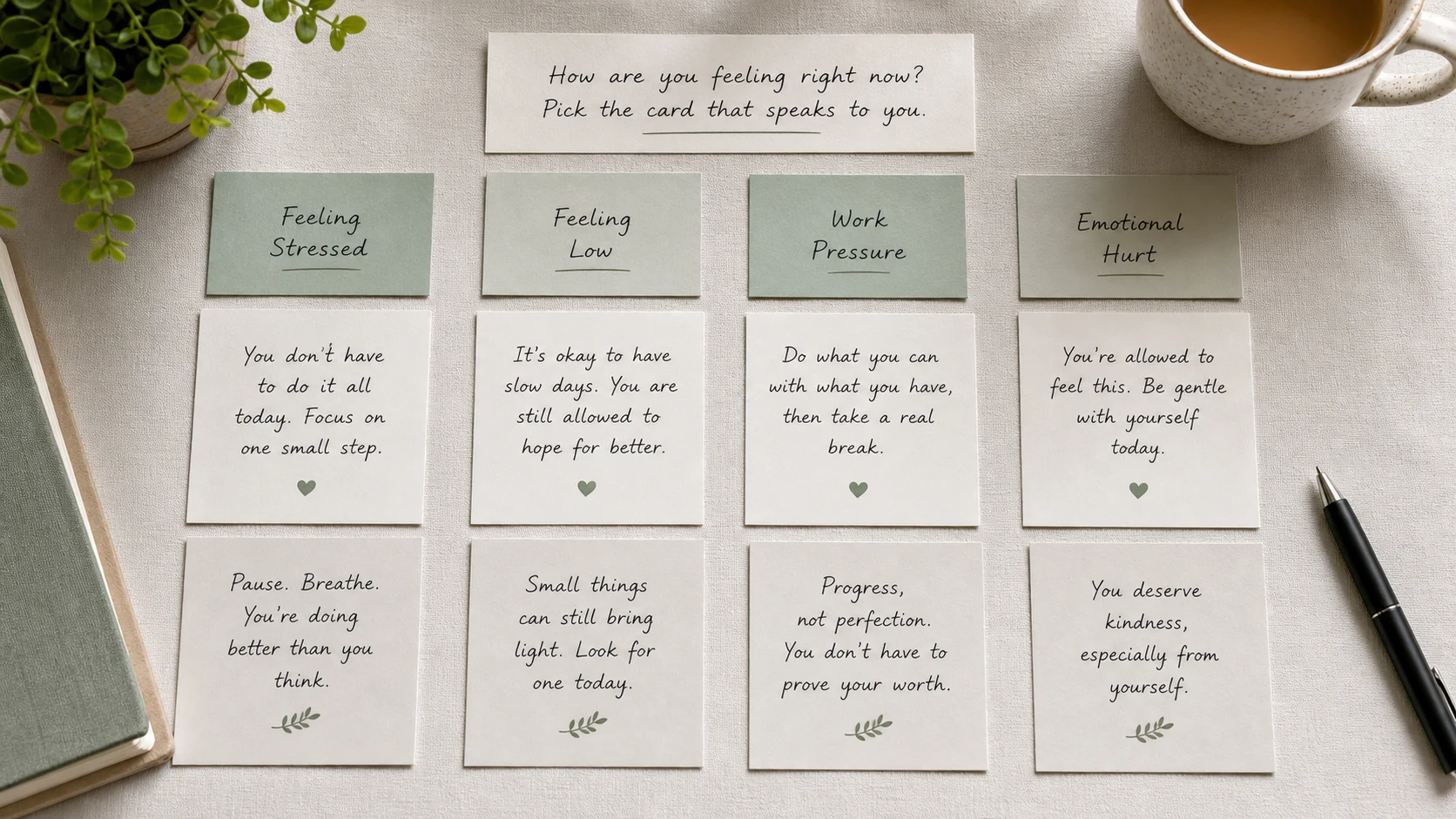
Use this quick guide:
| Situation | Better quote style | Example |
|---|---|---|
| Racing thoughts | Short and grounding | "One breath is a beginning." |
| Low motivation | Gentle and non-shaming | "Your pace can be slow and still be real." |
| Work pressure | Practical and focused | "The next right step is smaller than the whole mountain." |
| Emotional hurt | Validating and kind | "Heavy feelings ask for care, not shame." |
| Mild overload | Light humor | "My brain opened 47 tabs." |
You can also create a personal quote bank. Pick three lines: one for stress, one for low mood, and one for anxiety. Keep them somewhere easy to find. When you use one, add a small action beside it. Over time, you may notice which lines actually help and which ones merely sound good.
Turning Quotes Into a Gentle Self-Check
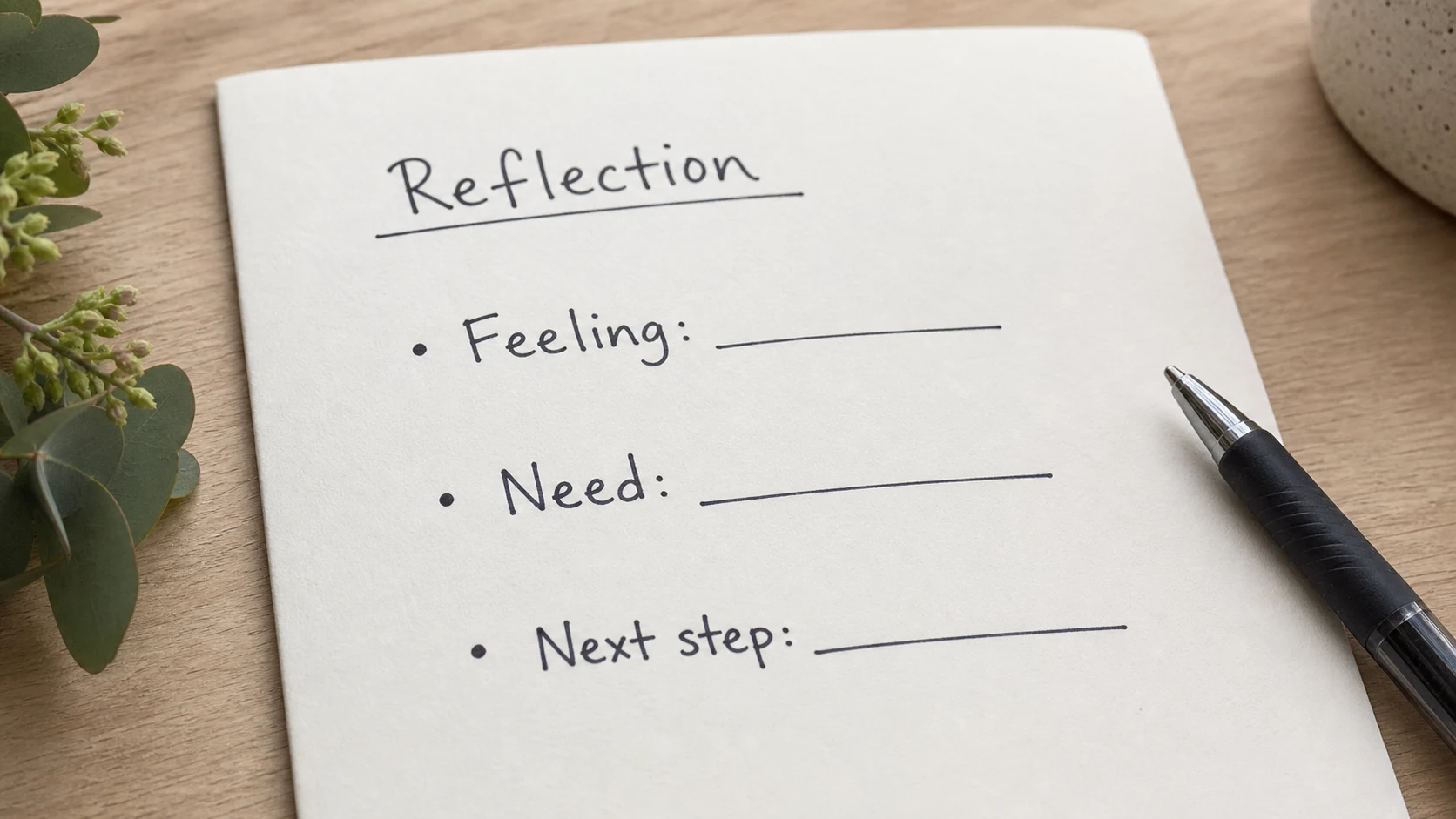
Quotes for stress and depression work best when they become invitations to notice what is happening. After choosing a quote, ask three questions:
- What feeling does this quote name?
- What pressure or need is underneath that feeling?
- What is one realistic action I can take in the next hour?
For example, if the quote is "I have been carrying too much without enough support," the feeling might be exhaustion, the need might be help or rest, and the action might be sending one honest message. If the quote is "The next right step is smaller than the whole mountain," the action might be opening one document instead of planning the entire week.
This is also a good place to notice patterns. Are your chosen quotes mostly about pressure, sadness, anxiety, numbness, anger, or loneliness? Repeated themes do not label you, but they can show what deserves attention. If you want a broader reflection point, you can review your recent depression, anxiety, and stress patterns with an educational screening tool and use the results as a conversation starter with a professional if needed.
FAQ
What is the best quote for stress?
The best quote for stress is one that helps you slow down and choose a next step. A strong example is: "Pressure asks for everything at once; wisdom answers one piece at a time." It names the pressure without making you feel weak for having it.
How can I relieve stress quickly?
Use a short quote as a body cue. Read "One breath is a beginning," then exhale slowly, lower your shoulders, relax your jaw, and name one task you can do next. Quick relief usually comes from combining language with a small physical reset.
What is the best quote for depression?
A helpful quote for depression should be compassionate and believable. Try: "You do not have to feel bright to take one caring step." It avoids forced positivity while still pointing toward care.
What are good quotes when feelings hurt?
When feelings hurt, choose quotes that validate pain without closing off support. For example: "The quiet ache deserves language, not judgment." You can pair it with one honest sentence in a journal or a message to someone safe.
Are funny stress relief quotes useful?
They can be useful when stress is moderate and humor gives you a little distance. They are less useful if you feel dismissed by them. Keep funny quotes that create space, and skip the ones that make you minimize your needs.
Should I use negative stress quotes?
Negative stress quotes can help if they name the truth clearly, but they should not push you toward hopelessness. Rewrite absolute lines into flexible ones, such as "I have been carrying too much without enough support."