How Are You Feeling Scales: A Practical Guide to Mood Check-Ins
How are you feeling scales are simple visual or numeric tools for naming an emotional state before it turns into a blur. A person might point to a 1-10 rating, choose a color on a chart, pick a face, or mark a phrase such as calm, tense, sad, or overwhelmed. The point is not to label yourself forever. It is to pause, notice, and give today's feeling enough structure to talk about it. If a quick scale shows that low mood, worry, or pressure keeps showing up, a structured emotional self-check can help you reflect more carefully on patterns across depression, anxiety, and stress.
What Is a Feelings Scale?
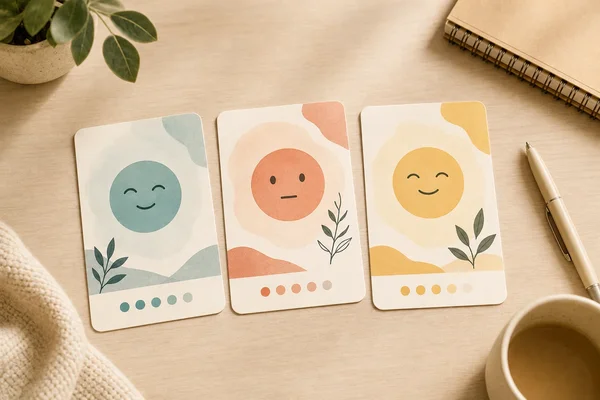
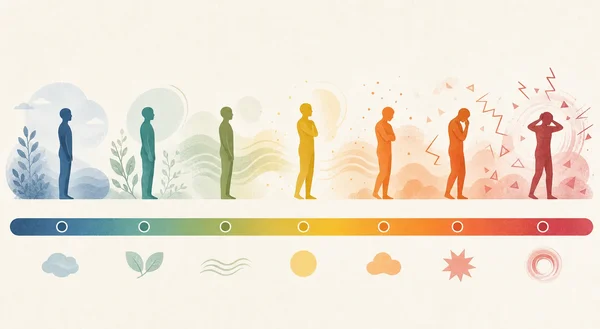
A feelings scale is a compact way to turn an internal experience into something visible. It can be as simple as "1 means very low and 10 means very intense," or as visual as a chart with colors, faces, body signals, and short emotion words. Teachers use them for classroom check-ins. Therapists and caregivers may use them to help someone describe regulation, frustration, worry, or energy. Adults can use them privately in a journal, notes app, workplace wellness routine, or weekly reflection.
The value is clarity. Many people know they feel "off" before they know whether that means tired, tense, irritated, numb, discouraged, or overloaded. A scale slows the moment down. Instead of asking for a perfect explanation, it asks for a small observation: where am I right now?
That observation can be useful on its own, but it is not a clinical conclusion. A feelings scale does not explain why a feeling exists, whether it will continue, or what care someone needs. It is a communication tool, a pattern-spotting tool, and sometimes a bridge into a more structured questionnaire or a conversation with a qualified professional.
How a 1-10 Feeling Scale Works
A how are you feeling scale 1 10 works best when the numbers have anchors. Without anchors, one person's 7 may be another person's 4. A simple version might define 1 as very settled or barely noticeable, 5 as present but manageable, and 10 as extremely intense or hard to function with. The exact words can change depending on what you are measuring: mood, stress, worry, sadness, anger, energy, or emotional overload.
For daily use, choose one question and keep it consistent for at least a week. For example: "On a scale of 1 to 10, how intense is my stress today?" or "How heavy does my mood feel today?" The number is less important than the pattern. A single high rating after a difficult day may be understandable. Several high ratings in a row, or a steady rise over time, gives you information worth taking seriously.
Some people prefer a feelings scale 1-10 because it gives more nuance. Others prefer a 1-5 scale because it is faster and less fussy. A 1-5 scale can work well for students, quick group check-ins, or anyone who dislikes overthinking numbers. A 1-10 scale can be better when you want to track smaller changes over time.
If you notice that your numbers are consistently high or your daily functioning is affected, an educational DASS-21 self-check may offer a more organized way to reflect on depression, anxiety, and stress symptoms over the past week.
How Adults and Students Can Use Them
How are you feeling scales for adults usually work best when they are private, quick, and connected to a next step. An adult might rate stress before a meeting, mood after work, or anxiety before sleep. The follow-up question matters: "What might have influenced this rating?" or "What would make the next hour easier?" This keeps the scale from becoming a scorecard and turns it into a practical reflection.
A how are you feeling today chart for adults can include more than happy-to-sad faces. Adult feelings are often mixed. Someone can feel grateful and exhausted, focused and tense, hopeful and worried. A useful adult chart may include categories such as mood, energy, body tension, mental load, social capacity, and sense of control. That gives a fuller picture without making the check-in complicated.
For students, the scale should match age and setting. Younger students often do better with colors, faces, and concrete choices. Older students may prefer a private form, a slide-based check-in, or a quick journal prompt. "On a scale of how are you feeling today for students" searches often point to classroom routines because the tool can support communication without forcing a student to speak in front of peers.
Privacy matters. A student should not have to reveal a sensitive rating publicly. Adults also deserve room to use a scale without feeling judged. The safest use is usually personal reflection, voluntary sharing, or a supportive one-to-one conversation.

Funny, Meme, and Art-Based Scales: Helpful or Distracting?
Funny "on a scale of how are you feeling today" charts, mood scale memes, seasonal themes, and art-based scales can be surprisingly useful. Humor lowers the barrier to answering. A person who does not want to say "I feel anxious" may be willing to point to a silly image that captures the same mood. In a group, a light prompt can make emotional language feel less heavy.
The risk is that humor can hide intensity. A meme scale may be great for an icebreaker, but it may not give enough detail if someone is struggling. If every option is exaggerated, sarcastic, or jokey, the person using it may not have a clear way to mark "I am not okay." The best funny scales still include a few grounded choices and a respectful way to opt out.
Art-based scales can work well when words are hard. Colors, shapes, weather, abstract images, or visual intensity can help people describe a state before they can name it. A person might choose a dark, crowded image for mental overload or a pale, flat image for low energy. This does not need to be perfect. It simply opens a door to better self-description.
For health-adjacent reflection, keep the tone gentle. Avoid imagery that intensifies fear or makes distress look dramatic. A useful scale should make emotional awareness easier, not turn discomfort into entertainment.
Choosing the Right Scale Format
Start with the situation. If you need a quick check-in, use a 1-5 or 1-10 number. If you are helping someone name emotions, use a chart with words and visuals. If you are tracking patterns, use the same question at the same time of day. If you are opening a conversation, include a follow-up prompt.
A good scale usually has five parts:
- A clear question, such as "How intense is my stress today?"
- Simple anchors for low, middle, and high ratings.
- Enough privacy that the person can answer honestly.
- A next step, such as rest, journaling, talking, planning, or seeking support.
- A reminder that a rating is information, not identity.
Emotion categories can also help. One common facial-expression model names seven basic expressions: happiness, sadness, fear, anger, disgust, surprise, and contempt. Other research has described a much wider emotional landscape, including 27 distinct emotion categories. For everyday use, you do not need to memorize a long list. You only need enough vocabulary to move from "bad" to something more specific, such as worried, lonely, overstimulated, disappointed, tense, restless, or emotionally drained.
If the scale is for repeated use, keep it boring in the best way. Use the same range, the same wording, and the same timing. Patterns become easier to see when the tool stays stable.
When a Simple Mood Scale Is Not Enough
How are you feeling scales are excellent for quick awareness, but they have limits. They usually measure one moment, one feeling, or one broad level of intensity. They do not separate different dimensions of emotional strain. A person may rate the day as an 8 out of 10 but still need to know whether the main issue is stress, anxious arousal, low mood, exhaustion, or a mix of several things.
That is where a more structured approach can help. DASS-21, for example, asks about experiences over the past week and organizes responses around depression, anxiety, and stress. It still should be treated as an educational screening resource, not a medical verdict, but it can give more shape than a single "how do you feel today?" number.
You might move from a simple scale to a structured tool when ratings stay high, when your answers feel confusing, when symptoms affect sleep, work, school, relationships, or daily routines, or when you want a clearer starting point for a conversation with a professional. For a low-pressure next step, you can review a private DASS-21 screening resource and use the result as one piece of self-reflection.
If you feel at risk of harming yourself or someone else, or if distress feels unmanageable, contact local emergency support or a qualified health professional. A scale can help you describe what is happening, but urgent support should not wait for another worksheet or rating.
FAQ
What is a feelings scale?
A feelings scale is a visual or numeric tool that helps someone identify and rate an emotional state. It may use numbers, colors, faces, words, or images. Its main purpose is to make feelings easier to notice, discuss, and track.
What is a how are you feeling today scale?
A how are you feeling today scale is a short check-in focused on the current day. It often asks someone to choose a number, image, or description that matches their mood, stress, energy, or emotional intensity.
Is a 1-10 feelings scale better than a 1-5 scale?
Neither is always better. A 1-5 scale is faster and easier for simple check-ins. A 1-10 scale gives more room for small changes, which can be useful when you are tracking patterns over several days or weeks.
What are the 7 basic emotional expressions?
One common facial-expression framework lists happiness, sadness, fear, anger, disgust, surprise, and contempt. In everyday mood scales, these can be useful starting points, but real emotional life is often more blended and specific.
What are the 27 distinct emotions?
Some emotion research has proposed 27 categories of reported emotional experience, showing that feelings can be more varied than a small basic-emotion list suggests. For a practical scale, the lesson is simple: include enough choices to capture nuance without overwhelming the user.
Can adults use how are you feeling scales?
Yes. Adults can use them for journaling, stress tracking, therapy preparation, workplace wellness, or private reflection. Adult scales often work best when they include context, such as sleep, workload, body tension, and social energy.
When should I use a structured tool instead of a mood scale?
Use a structured tool when quick ratings are not giving enough clarity, when high ratings repeat, or when emotional strain is affecting daily life. A structured questionnaire can organize patterns more clearly, while professional support is important when distress is persistent, intense, or unsafe.