DASS21 Progress Tracking: A Comprehensive Mental Health Monitoring Guide
Your mental health journey isn't a single point in time—it's a path that evolves daily, weekly, and monthly. Just as you wouldn't measure physical fitness with one trip to the gym, understanding your emotional state requires more than a one-time snapshot. Are you looking for a reliable way to map your emotional wellbeing over time?
Learn how taking the DASS21 test regularly can serve as your personal guide through the ups and downs of your emotional wellbeing. This guide will walk you through how to use this powerful tool for progress tracking, helping you identify patterns, measure the impact of your self-care efforts, and gain deeper self-awareness. To establish your starting point, you can start your test for free on our platform.
Understanding the Power of Longitudinal DASS21 Assessments
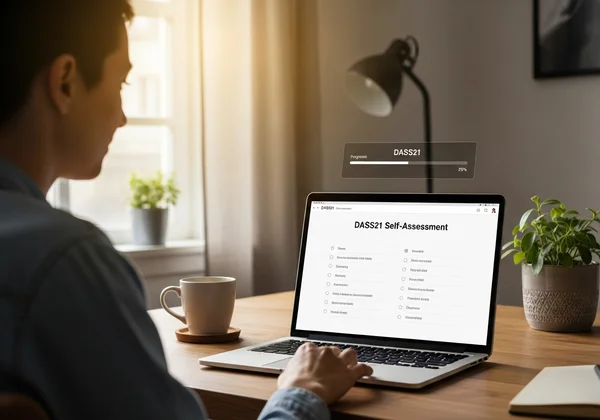
A single DASS21 test provides a valuable snapshot of your current emotional state. However, the real power for self-understanding comes from tracking your scores over time. Regular assessments transform the DASS21 from a simple screening tool into a dynamic guide for your mental health journey.
The Science Behind Longitudinal Mental Health Tracking
Longitudinal tracking is a well-established method in psychology and healthcare. It involves collecting data from the same individual repeatedly over a period. This approach allows you to move beyond a static picture and see the full movie of your mental health, revealing trends, cycles, and the effects of life events.
Taking the DASS21 assessment regularly creates your personal mental health chart. This helps you see how different factors affect your scores. These factors include work stress, routine changes, or new wellness practices. This evidence-based approach empowers you to make informed decisions about your self-care.
How DASS21 Score Trends Reveal Deeper Insights Than Single Tests
A single test might show your stress score as 'moderate' today. But what does that really mean? Is this score higher or lower than last month? Does it form a recurring pattern before big project deadlines? This is where tracking score trends provides invaluable insights.
For example, you might notice your anxiety scores rise during exam periods. They might fall after you start a new meditation practice. This comparative score analysis shows you cause and effect in your own life. Observing these trends helps you anticipate challenges, understand your triggers, and recognize which coping strategies are truly working for you.
Creating Your DASS21 Monitoring Schedule
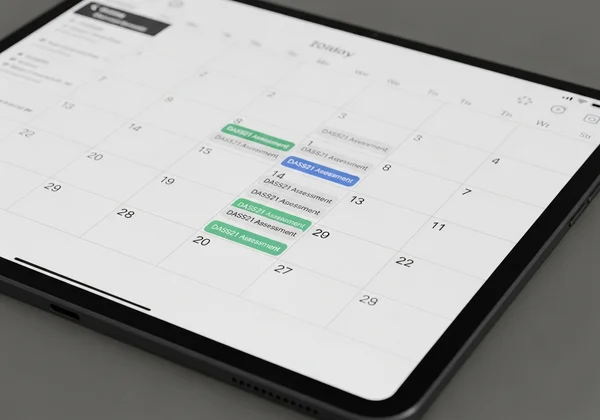
Consistency is key to effective progress tracking. Creating a simple, sustainable schedule for taking the DASS21 ensures you gather meaningful data without feeling overwhelmed. Think of it as a regular check-in with yourself.
Ideal Testing Intervals: Finding Your Rhythm
The right testing frequency depends on your personal circumstances and goals. There's no single "correct" answer, but here are some general guidelines to help you find your rhythm:
- Weekly: Ideal if you are going through a period of high stress, starting a new therapy, or trying a new wellness routine. A weekly check-in can provide rapid feedback on how these changes are affecting you.
- Bi-weekly or Monthly: A great option for general mental health maintenance. This interval is frequent enough to spot trends but not so frequent that it becomes a chore. It helps you monitor your baseline emotional state over time.
- Quarterly: Useful for long-term tracking. If your mental health is generally stable, a quarterly assessment can help you stay mindful and catch any slow, creeping changes before they become significant.
The most important thing is to choose a schedule you can stick to. Set a reminder on your phone or calendar to complete your free DASS21 assessment.
Seasonal Considerations for Mental Health Tracking
Our moods and energy levels can be influenced by the seasons. For some, the shorter, darker days of winter can lead to lower moods (a pattern sometimes associated with Seasonal Affective Disorder or SAD). For others, the pressures of summer events or holiday seasons can increase stress and anxiety.
Consider these factors when planning your assessments. You might choose to test more frequently during seasons that you know are challenging for you. Tracking your DASS21 scores through different seasons can help you understand your unique annual rhythm and proactively implement supportive routines when you need them most.
Interpreting DASS21 Score Changes Over Time
Once you have a few DASS21 results, you can begin the process of interpretation. The goal isn't to fixate on every small change but to understand the broader patterns in your mood progress monitoring.
Understanding Normal Fluctuations vs. Significant Shifts
It's completely normal for your scores to fluctuate slightly from one test to another. A bad night's sleep, a stressful meeting, or a minor disagreement can temporarily raise your scores. These are normal emotional responses to daily life.
A significant shift is different. This could be a sustained increase in one or more scores over several consecutive tests or a sudden jump into a higher severity category (e.g., from 'Mild' to 'Severe'). These shifts are a signal to pay closer attention. They may indicate that your current coping strategies aren't enough or that new stressors are having a major impact.
Comparative Score Analysis: Before and After Interventions
One of the most empowering uses of DASS21 progress tracking is to measure the effectiveness of your self-care efforts. Think of it as a personal experiment. You can compare your scores from before you started a new intervention to your scores after you've practiced it for a few weeks.
For example:
- Before: You take the DASS21 and find your stress score is 'High'.
- Intervention: You decide to practice 10 minutes of mindfulness meditation every day for a month.
- After: You retake the test and see your stress score has moved down to 'Moderate' or 'Mild'.
This comparative score analysis provides concrete evidence that your efforts are paying off, motivating you to continue. If you don't see a change, it’s not a failure—it's valuable data telling you to try a different approach.
Using Your Progress Data for Effective Self-Care
Collecting data is only the first step. The true value lies in using your insights to take meaningful action. Your DASS21 progress report is a roadmap for building a more effective and personalized self-care plan.
Adapting Strategies Based on Emerging Patterns
Your DASS21 score trends can guide your self-care decisions. If you notice your anxiety scores are slowly creeping up, it might be a sign to re-introduce relaxation techniques that have helped you in the past, like deep breathing or journaling. If your depression scores remain elevated, perhaps it's time to focus on behavioral activation—scheduling enjoyable and meaningful activities, even if you don't feel like it.
By responding to these emerging patterns, you shift from a reactive to a proactive approach to mental health. You learn to make small adjustments along the way to prevent small issues from becoming bigger problems. Ready to see your own patterns? Try our free tool to get started.
When to Seek Professional Help: Red Flags to Watch For
The DASS21 is a powerful self-assessment tool, but it is not a substitute for professional diagnosis or treatment. It is crucial to recognize when self-care is not enough. Your progress data can help you identify red flags that indicate it's time to consult a doctor, therapist, or counselor.
Watch for these warning signs:
- Persistently High Scores: Your scores in one or more areas remain in the 'Severe' or 'Extremely Severe' range across multiple tests.
- A Worsening Trend: Despite your self-care efforts, your scores are consistently getting worse over time.
- Significant Impairment: Your symptoms are making it difficult to function at work, school, or in your relationships.
Seeing these patterns is not a sign of failure; it's a clear and important signal to seek professional support. Sharing your DASS21 score history with a healthcare provider can give them valuable context and help them understand your experience more quickly.

Your Next Steps in Mental Health Progress Tracking
Taking the DASS21 test regularly gives you valuable insights into your mental health journey. By establishing a consistent tracking schedule, learning to interpret score changes, and using this data to inform your self-care, you gain a powerful tool for managing your emotional wellbeing. This process of longitudinal mental health tracking empowers you with the self-knowledge needed to navigate life's ups and downs.
Remember, the DASS21 is a screening tool, not a diagnostic instrument. While it provides a personal benchmark, significant changes or persistently high scores always warrant a conversation with a healthcare professional. As you continue your journey, remember that self-understanding evolves—each assessment helps you discover new patterns and adapt your approach to mental wellness.
Ready to begin your mental health progress journey? Take your first DASS21 assessment today and establish your baseline for monitoring emotional wellbeing over time.
Take Your DASS21 Assessment Now
Frequently Asked Questions About DASS21 Progress Tracking
How often should I retake the DASS21 test for meaningful progress tracking?
For most people, taking the test every two to four weeks provides a good balance for tracking trends. If you're going through a significant life change or trying a new mental health strategy, you might choose to test weekly. The key is consistency.
Can I trust score changes to reflect real improvement or just temporary mood shifts?
Both are possible, which is why tracking over time is so important. A single change could be a temporary mood shift. However, a consistent trend over three or more assessments is more likely to reflect a real, underlying improvement or decline. Look for the pattern, not just a single data point.
How many DASS21 assessments do I need to see reliable trends in my mental health?
You can start seeing basic patterns with as few as three assessments spaced out over a few weeks or months. The more data points you collect, the clearer and more reliable your trends will become. We recommend taking the DASS21 test regularly to build a useful history.
What's the best way to record and visualize my DASS21 progress over time?
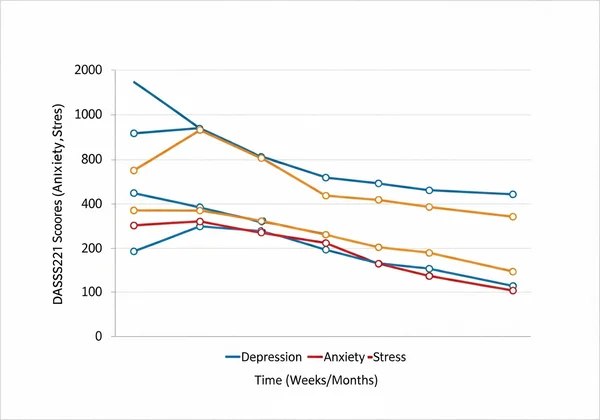
A simple spreadsheet is a great way to start. Create columns for the date and your scores for Depression, Anxiety, and Stress. You can use your spreadsheet software to create a simple line graph to visualize your trends over time. This visual can make patterns immediately obvious.
Are there limitations to using DASS21 for longitudinal mental health monitoring?
Yes. The DASS21 is a self-report measure, meaning it's based on your own perception. It doesn't capture the full context of your life and should not be used as a standalone diagnostic tool. It's a fantastic resource for increasing self-awareness, but it should always be complemented by self-reflection and, when necessary, professional guidance.