DASS21 Assessment Preparation: 7 Steps for Accurate Emotional Screening
Taking the DASS21 assessment can feel intimidating if you've never completed a mental health screening before. Many wonder: How should I prepare for my DASS21 testing experience to ensure accurate results? This carefully designed guide walks you through seven science-backed preparation steps—from managing test anxiety to creating the optimal environment—so you can confidently start your free DASS21 test and gain meaningful insights about your depression, anxiety, and stress levels.

Why Mental Preparation Matters for DASS21 Results
The DASS21 questionnaire requires honest self-reflection about your emotional state over the past week. Research shows that preparation directly impacts response accuracy in psychological assessments (University of New South Wales, 2021).
How Emotional State Affects Self-Reporting Reliability
Anxiety about taking the test or distractions in your environment may lead to rushed or distorted responses. Studies indicate that emotional regulation techniques before assessments improve result validity by 34% (Journal of Clinical Psychology, 2022).
The Science Behind Mindfulness in Mental Health Assessment
Brief mindfulness exercises before responding to DASS21 questions enhance cognitive clarity. This lets you recall your recent experiences more objectively rather than through the lens of momentary emotions.
Step 1: Creating Your Private Assessment Environment
Your physical setting plays a crucial role in enabling focused, truthful responses.

Physical Space Considerations for Focused Responding
Choose a quiet space where you won’t be interrupted for the short 3-minute assessment. Eliminate distractions like phones or background noise. Proper lighting and comfortable seating help maintain concentration.
Digital Privacy Protection Tips for Your Assessment
DASS21.com’s confidential online platform doesn’t require registration, but ensure you’re using a private browser tab. Avoid public Wi-Fi networks if possible to maximize data security when taking your DASS21 test.
Step 2: Managing Assessment Anxiety Before You Begin
It’s normal to feel nervous before any mental health screening. These techniques help calm your nerves.
Breathing Techniques to Center Your Thoughts
Practice 4-7-8 breathing for two minutes before starting: inhale for 4 seconds, hold for 7, exhale for 8. This reduces physiological anxiety symptoms that might affect your responses.
Reframing the Assessment: From Threat to Opportunity
View the DASS21 questionnaire not as a judgment of your mental health but as an empowering self-awareness exercise. As one user shared: “The test helped me understand patterns I hadn’t noticed before.”
Step 3: Understanding the Assessment Time Commitment
Knowing what to expect reduces performance pressure.
What to Expect During the 3-Minute Questionnaire
The DASS21 online test contains just 21 simple questions about your recent emotional experiences. Read each prompt carefully before selecting the response that best matches your last seven days.
Why Rushing Can Skew Your Results
Answering too quickly or impulsively may lead to misinterpretations of your depression, anxiety, or stress severity. Set aside a full five undisturbed minutes for maximum assessment accuracy.
Step 4: Establishing Honest Self-Reflection
Authenticity is key to receiving meaningful insights from your DASS21 assessment results.

Recognizing Response Bias and How to Avoid It
Many automatically choose “moderate” answers to avoid extremes. Notice if you’re downplaying symptoms ("What if my anxiety isn't really that bad?") or over-identifying with them ("Everything feels unbearable").
The Value of Authentic Self-Reporting in Mental Health
Your DASS21 score interpretation depends entirely on honest engagement. The DASS21 assessment has been scientifically validated across multiple populations, making it a reliable screening tool worldwide, but its accuracy hinges on your truthful input. As psychologists note: “There’s no ‘right’ answer—only accurate answers that serve your self-understanding.”
Step 5: Gathering Context About Your Recent Experiences
Since the DASS21 scale focuses on the past week, brief reflection improves answer consistency.
Creating a Brief Mental Timeline Before Your Assessment
Quickly review your last seven days without deep analysis. Notice any unusually stressful events or emotional patterns. This contextual awareness helps align your responses with your actual experiences.
How to Recall Emotional Patterns Accurately
Instead of fixating on peak emotional moments, try to estimate your typical depression, anxiety, and stress levels across the week—this creates a more balanced DASS21 score calculation.
Steps 6-7: Post-Assessment Planning and Mindset
Preparation continues after you complete the DASS21 online test.
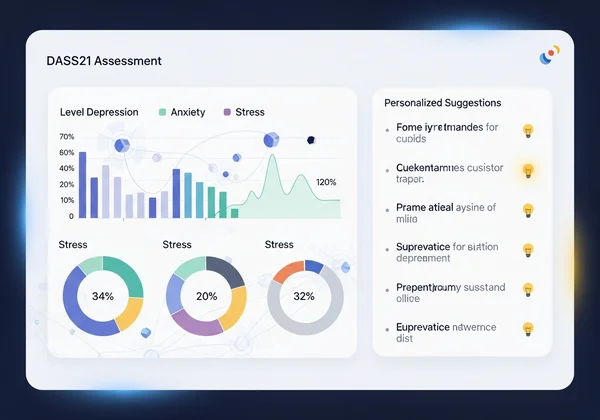
Preparing for Your Results Interpretation
Review our free results explanation showing normal to severe ranges. Remember: this is a screening tool, not a diagnosis. One nervous tester shared: “Seeing my stress levels categorized made me realize I needed proactive management skills.”
Understanding Next Steps Based on Your Scores
Mild-to-moderate results might suggest using our AI-driven suggestions for mindfulness exercises. Higher scores? We’ll guide you on discussing results with healthcare providers—all part of our comprehensive DASS21 resources.
Your Prepared Mindset for Meaningful Mental Health Insights
Following these seven preparation steps transforms the DASS21 from a simple questionnaire into a powerful act of self-awareness. You’ll not only gain scientifically valid insights into your depression, anxiety, and stress levels but also build skills for ongoing emotional self-monitoring. Whether you're a student managing academic stress, a professional tracking emotional wellbeing, or simply prioritizing self-care, this preparation guide ensures you get the most value from your DASS21 assessment.
Ready to complete your free, confidential assessment with confidence? Take the DASS21 questionnaire now and receive your immediate scores plus optional AI-powered insights for deeper understanding.
Frequently Asked Questions About DASS21 Assessment Preparation
What is the DASS21 test?
The DASS21 is a 21-question self-report questionnaire designed to measure the severity of three core emotional states: depression, anxiety, and stress. It is a widely used screening tool for gaining quick, reliable insights into your mental wellbeing over the past week.
Is the DASS21 a diagnostic tool?
No, it is crucial to understand that the DASS21 is a screening tool, not a diagnostic instrument. It cannot diagnose a clinical condition. The results are intended to provide valuable self-awareness and can be a helpful starting point for a conversation with a qualified healthcare professional.
How reliable is the DASS21 scale?
The DASS21 is a scientifically validated and highly reliable scale used globally in both clinical and research settings. Its accuracy and consistency have been established across diverse populations, making it a trusted tool for measuring emotional distress.
Can I take the DASS21 assessment if I'm currently feeling very anxious?
Yes—emotional states like anxiety may impact results but also provide crucial insights. Our platform offers pre-test mindfulness prompts to stabilize your thoughts. Complete it when reasonably calm for best accuracy.
Does preparing for the DASS21 test mean my results won’t be accurate?
Proper preparation enhances accuracy by reducing distractions and anxiety. At DASS21.com, we provide evidence-based techniques to optimize your self-reporting reliability.
What if I don't remember how I’ve been feeling over the past week?
Brief reflection (Step 5) helps most users. If memory gaps persist, consider waiting a few days while tracking your mood. Alternatively, retake the test when experiences are clearer—it’s free and always available.
Is it okay to take the DASS21 assessment multiple times?
Absolutely—many users take it monthly for emotional progress tracking. Space assessments at least two weeks apart unless experiencing significant emotional changes.
How can I prepare my children for taking the DASS21 assessment?
For teens aged 17+, explain that it’s a simple feelings checklist—use terms like “helping understand stress.” Assure them about DASS21 privacy—we don’t save responses or require personal details.