DASS-21: Your Definitive Guide to Depression & Anxiety Scale
In our fast-paced world, tuning into our emotional state is more important than ever. You might feel overwhelmed, constantly on edge, or just not like yourself, but struggle to put a name to these feelings. If you've ever wondered about a clear, simple way to check in with your mental well-being, you've likely come across the term DASS-21. But what is the DASS21 test, and how can it offer you a moment of clarity? This guide will walk you through everything you need to know about this powerful self-assessment tool.
The Depression, Anxiety, and Stress Scale (DASS-21) is a widely recognized set of questions designed to measure your emotional state over the past week. It’s not about labels or diagnoses; it’s about awareness. It provides a personal snapshot, helping you understand the intensity of feelings related to depression, anxiety, and stress. If you're ready to gain a deeper understanding of your emotional landscape, you can take the free assessment right now.
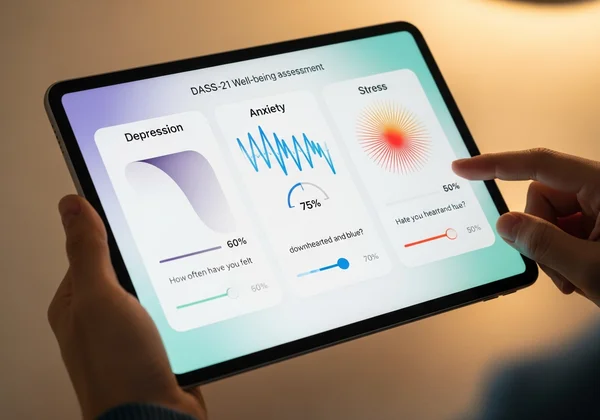
What is the DASS-21 Scale?
The DASS-21 is a self-report questionnaire designed to measure the severity of a range of symptoms common to both depression and anxiety. Unlike other assessments that might blend these concepts, the DASS-21’s key strength is its ability to differentiate between the core symptoms of three distinct emotional states. It acts as a personal emotional barometer, offering you a structured way to reflect on your recent experiences and feelings.
This tool is a shortened, 21-question version of the original 42-item scale, making it quick and accessible. It typically takes only about 3-5 minutes to complete, providing immediate insight without a significant time commitment. It's a first step—a valuable tool for self-monitoring and reflection.
Understanding the Three Core Subscales: Depression, Anxiety, and Stress
The true power of the DASS-21 lies in its three distinct subscales. Each set of seven questions targets a specific emotional experience, allowing for a more nuanced understanding of your mental state.
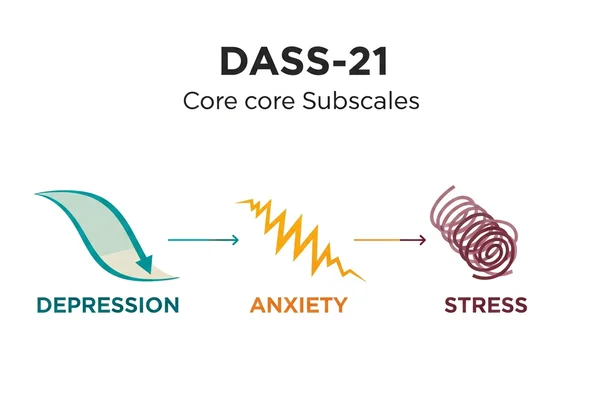
- Depression Scale: This subscale assesses symptoms like low mood, lack of interest or joy (anhedonia), hopelessness, and low self-esteem. It focuses on the sense of being "stuck" and unable to find pleasure or motivation in life.
- Anxiety Scale: This measures physiological arousal and subjective experiences of fear. Questions touch on symptoms like a racing heart, shakiness, panic, and persistent worry about things that might happen. It captures the "fight or flight" feeling that has become chronic.
- Stress Scale: This unique subscale focuses on feelings of nervous tension, irritability, and being easily agitated or over-reactive. It identifies the "on edge" feeling where you find it difficult to relax and may snap at minor provocations.
By separating these three areas, the DASS-21 helps you see if you're primarily struggling with low mood, physical anxiety, general tension, or a combination. This clarity can be the first step toward finding the right coping strategies.
DASS-21 vs. DASS-42: Key Differences and When to Use Each
You might also encounter the DASS-42. The primary difference is length. The DASS-42 is the original, comprehensive version with 42 questions, often used in clinical research settings for a more detailed analysis. The DASS-21 is the short form, using a curated set of 21 questions from the original.
For general self-assessment, the DASS-21 is the ideal choice. It's faster, less intimidating, and has been proven to be just as reliable for screening purposes. It gives you a quick, accurate snapshot, making it perfect for regular check-ins. If you're curious, you can get your scores now using the streamlined DASS-21 version.
The Science Behind DASS-21: History, Development, & Psychometrics
To trust a tool, you need to know it's built on a solid foundation. The DASS-21 scale is not just a random collection of questions; it's a scientifically validated instrument rooted in decades of psychological research. Its credibility is a key reason it’s used globally by individuals, researchers, and clinicians.
This scientific backing ensures that the results you receive are a meaningful reflection of your experiences, providing a trustworthy starting point for your mental health journey.
From Concept to Clinician: The Lovibond & Lovibond Legacy
The DASS was developed by S.H. Lovibond and P.F. Lovibond at the University of New South Wales, Australia, in 1995. Their goal was to create a tool that could better distinguish between the overlapping symptoms of depression and anxiety. They wanted to move beyond a single "distress" score and provide a more dimensional view of a person's emotional state. Their work has since become a cornerstone in psychological assessment.
Reliability and Validity: Why the DASS-21 is a Trusted Tool
In psychology, "reliability" and "validity" are the gold standards for any assessment. The DASS-21 excels in both areas.
- Reliability: This means the scale is consistent. If you were to take the test under similar conditions, you would get similar results. Numerous studies have shown the DASS-21 has high internal consistency, meaning its 21 questions work together cohesively to measure depression, anxiety, and stress.
- Validity: This means the scale actually measures what it claims to measure. Research confirms that the DASS-21 accurately captures the distinct emotional states of depression, anxiety, and stress, and its scores correlate well with other established clinical measures.
This robust scientific foundation is why you can feel confident in the insights you gain from our online DASS-21 tool.
How to Take & Score Your DASS-21 Assessment
Taking the DASS-21 assessment is straightforward. The process is designed to be user-friendly, allowing you to focus on your honest reflections. Remember, the goal is to get an accurate snapshot of your feelings over the last week.
The best way to experience this is to do it yourself. You can start your self-evaluation on our platform for free and confidentially.
The 21 Questions: What to Expect During the Self-Assessment
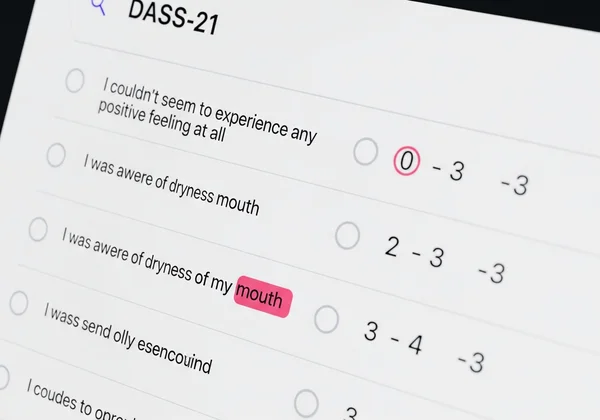
The dass21 questionnaire presents you with 21 statements. For each one, you'll be asked to rate how much it applied to you over the past week on a 4-point scale:
- 0: Did not apply to me at all
- 1: Applied to me to some degree, or some of the time
- 2: Applied to me to a considerable degree, or a good part of the time
- 3: Applied to me very much, or most of the time
The questions cover a range of emotional and physical experiences, such as "I found it hard to wind down" or "I couldn't seem to experience any positive feeling at all."
Step-by-Step DASS-21 Scoring Calculation
While online tools automate this, understanding how is the DASS21 score calculated? can demystify the process.
- Sum the Scores: Add up the scores for the seven questions belonging to each subscale (Depression, Anxiety, and Stress).
- Multiply by Two: Since the DASS-21 is a short form, the summed scores for each subscale are multiplied by two. This makes them comparable to the scores from the full DASS-42 scale.
For example, if your total score for the seven depression questions is 9, your final Depression subscale score would be 18. This final number is then used to determine the severity level.
Interpreting Your DASS-21 Scores & Severity Ratings
Receiving your scores is just the beginning. The real value comes from understanding what they mean. The dass 21 score interpretation is not about passing or failing; it’s about gaining awareness. Your results are categorized into different severity levels, helping you contextualize your experience.
The following is a general guide to understanding the severity ratings for each scale. After completing the assessment on our site, you'll receive a personalized breakdown.
Understanding Normal, Mild, Moderate, Severe, and Extremely Severe Levels
Each subscale score (Depression, Anxiety, and Stress) falls into one of five categories:
| Severity | Depression | Anxiety | Stress |
|---|---|---|---|
| Normal | 0-9 | 0-7 | 0-14 |
| Mild | 10-13 | 8-9 | 15-18 |
| Moderate | 14-20 | 10-14 | 19-25 |
| Severe | 21-27 | 15-19 | 26-33 |
| Extremely Severe | 28+ | 20+ | 34+ |
These ranges provide a framework for understanding the intensity of your symptoms. A "Normal" score suggests minimal distress, while a score in the "Severe" range indicates that these feelings are significantly impacting your daily life.
What Does Your DASS-21 Score Mean for You?
Your score is a data point, not a definition of who you are. It’s a signpost. A high score in Stress might prompt you to explore relaxation techniques. A moderate score in Depression could be a signal to reconnect with hobbies and people who bring you joy. Think of your results as a guide, pointing you toward areas that may need more attention and care. You can explore your results and get a personalized AI analysis on our platform.
DASS-21's Role: Clinical Applications & Ethical Limitations
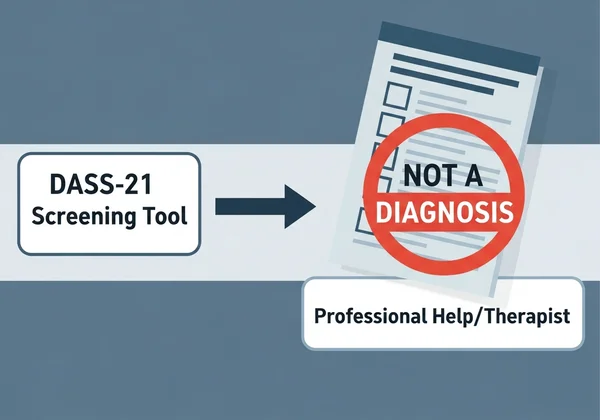
While the DASS-21 is an incredibly useful tool for self-awareness, it's vital to understand its proper role. It is a powerful screening tool used by individuals and professionals, but it has important limitations that must be respected for responsible use.
Knowing what the DASS-21 is—and what it isn't—is key to using it effectively and safely.
How Professionals Utilize the DASS-21 for Screening and Monitoring
Therapists, counselors, and doctors often use the DASS-21 as a starting point. It can:
- Provide a Quick Screening: Help identify individuals who may need further evaluation.
- Track Progress: Allow them to monitor a client's symptoms over time to see if a treatment or therapy is working.
- Facilitate Conversation: Give them a structured way to ask about specific symptoms related to mood and anxiety.
It serves as an efficient way to gather objective information to complement a clinical interview.
The DASS-21 is Not a Diagnostic Tool: Seeking Professional Help
This is the most important takeaway: Is the DASS21 a diagnostic tool? No, it is not. The DASS-21 can identify the presence and severity of symptoms, but it cannot tell you why you have them or give you a clinical diagnosis like "Major Depressive Disorder."
A formal diagnosis can only be made by a qualified healthcare professional (like a psychiatrist, psychologist, or clinical social worker) after a comprehensive evaluation. If your scores are in the moderate to extremely severe range, or if you are concerned about your mental health for any reason, it is crucial to speak with a professional. Use your DASS-21 results as a starting point for that conversation.
Your Next Steps: Embracing Self-Awareness with the DASS-21
The DASS-21 is more than just a questionnaire; it's a tool for empowerment. It provides a confidential, accessible, and scientifically grounded way to check in with yourself, untangle complex emotions, and gain valuable self-knowledge. By understanding its three distinct scales—Depression, Anxiety, and Stress—you can get a clearer picture of your emotional well-being and identify areas that may need your attention.
Remember, this is a first step, not a final judgment. Your results are a guide for self-reflection and a potential starting point for a conversation with a mental health professional. Taking a few minutes to understand yourself better is an act of self-care.
Ready to gain clarity? Your journey toward greater self-awareness starts here. Take the free DASS-21 test today and receive your instant, confidential results.
Frequently Asked Questions About the DASS-21 Scale
Is the DASS-21 test free and confidential?
Yes, on platforms like ours, the free dass21 test is offered completely free of charge and with a strong commitment to your privacy. You can take the assessment without registration, and your responses and results are kept confidential, providing a safe space for self-reflection.
What is a normal score on the DASS-21?
A "normal" score indicates a low level of distress. For the DASS-21, normal score ranges are 0-9 for Depression, 0-7 for Anxiety, and 0-14 for Stress. Falling within these ranges suggests that symptoms in these areas have not been a significant concern for you in the past week.
Who can use the DASS-21?
The DASS-21 is designed for adults and adolescents (typically aged 17 and above). It is widely used by individuals interested in self-monitoring (Self-Carers), students for academic or personal reasons, and professionals (like therapists and counselors) as a screening tool.
What should I do with my DASS-21 results?
Use your results as a tool for reflection. If your scores are low, it might reinforce that your current coping strategies are working well. If your scores are elevated, consider it a signal to prioritize self-care, explore stress-management techniques, or reach out to a friend, family member, or mental health professional. It's valuable information to bring to a doctor or therapist. You can always take a quick self-check to monitor your levels over time.
Can the DASS-21 be used to diagnose mental health conditions?
No. It is crucial to understand that the DASS-21 is a screening tool, not a diagnostic one. It measures the severity of symptoms but cannot determine the cause or provide a clinical diagnosis. A diagnosis must be made by a qualified healthcare provider through a comprehensive evaluation.