DASS 21 vs DASS 42 Key Differences in Scoring, Use, and Interpretation
When people search for DASS 21 vs DASS 42, they are usually asking a practical question: are these two separate tools, or two lengths of the same Depression Anxiety Stress Scales system? The short answer is that both forms measure depression, anxiety, and stress over the past week, but they differ in length, scoring workflow, and the amount of item-level detail they provide. DASS-21 is the shorter version, while DASS-42 is the original full version. If you want a simple educational starting point before reading deeper scoring notes, the DASS-21 self-reflection tool can help you understand the shorter format in a low-pressure way.
DASS-21 and DASS-42 Measure the Same Three Domains
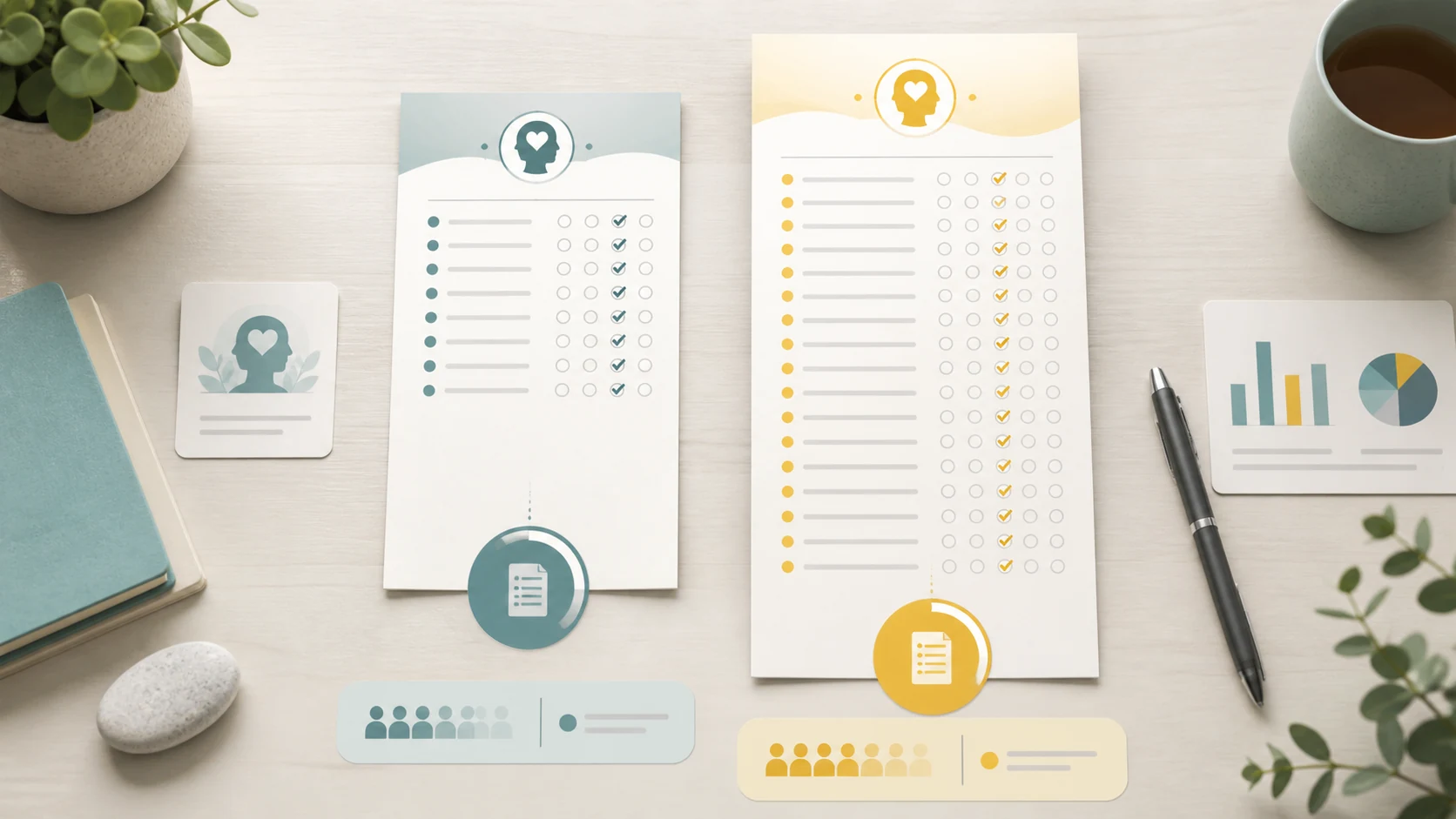
DASS-21 and DASS-42 are both self-report scales built around three related but distinct emotional domains: depression, anxiety, and stress. The full DASS-42 has 42 items, with 14 items for each domain. DASS-21 has 21 items, with 7 items for each domain. In both versions, a person rates how much each statement applied to them during the past week, usually on a four-point severity or frequency scale.
That shared structure matters because the comparison is not like choosing between unrelated assessments. DASS-21 is a shorter form derived from the same scale family. It keeps the three-domain model but asks fewer questions. This is why many references discuss DASS-21; Lovibond & Lovibond, 1995, while also pointing back to the larger DASS manual and the original 42-item form.
The main difference is therefore not the emotional territory being measured. It is the tradeoff between speed and detail. DASS-42 gives more item-level coverage inside each domain. DASS-21 gives a faster snapshot that is easier to complete in everyday self-reflection, digital screening, classrooms, and many research settings where response burden matters.
DASS-42 Scoring vs DASS-21 Scoring
DASS-42 scoring is the more direct of the two. Because each domain has 14 items, you add the 14 depression items, the 14 anxiety items, and the 14 stress items separately. Each subscale can range from 0 to 42. A higher score generally indicates more frequent or intense experiences in that domain during the past week.
DASS-21 scoring is slightly different because each domain has only 7 items. You first add the 7 items for depression, anxiety, and stress separately. Then, in many scoring and interpretation guides, each DASS-21 subscale score is multiplied by 2 so it can be compared with the DASS-42 severity bands. This is why searches for DASS-21 scoring and interpretation often mention both the raw 21-item score and the adjusted score.
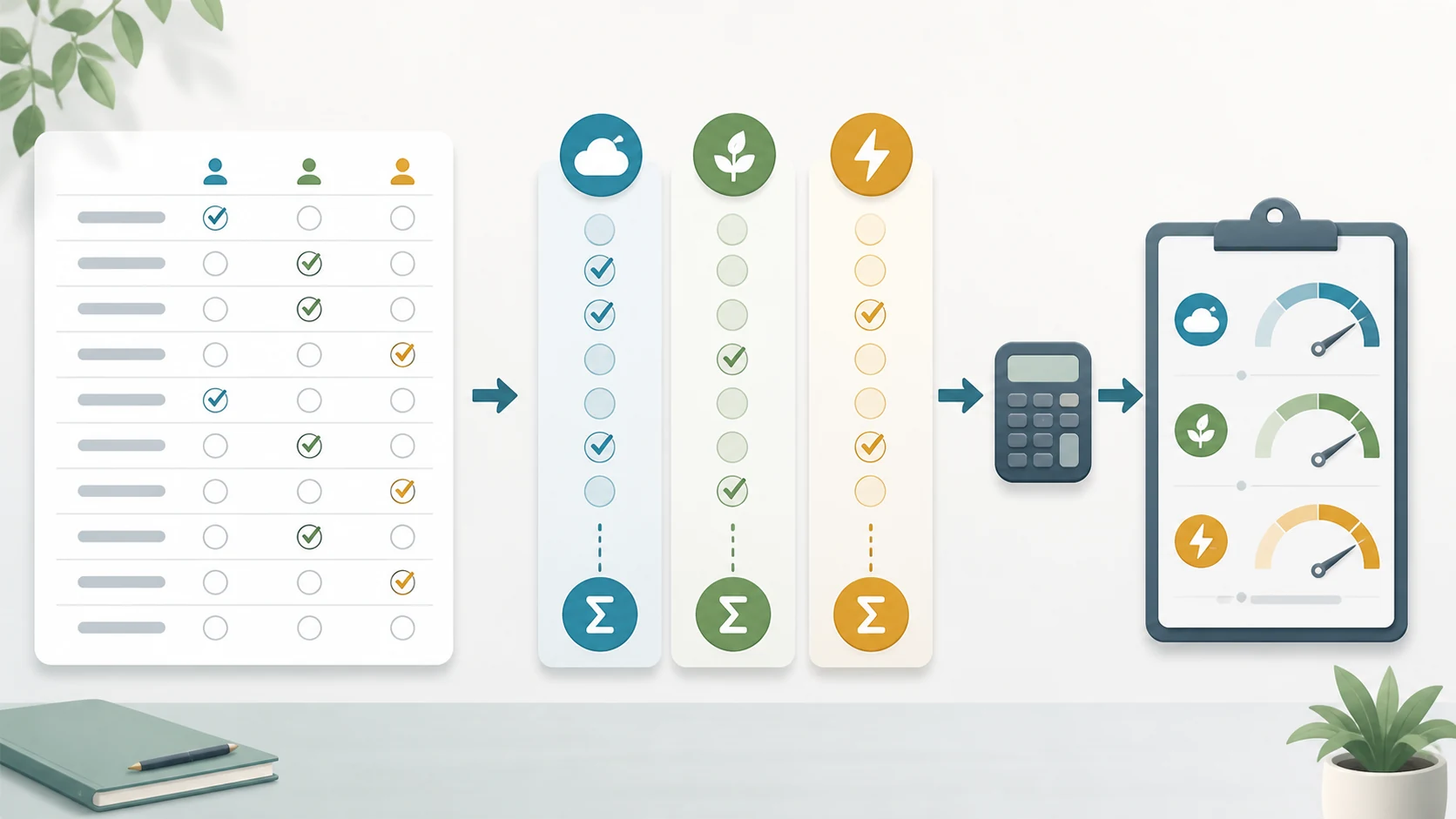
For users comparing DASS-42 scoring and DASS-21 scoring, the key is to avoid mixing raw scores across forms. A DASS-21 raw depression score of 8 is not numerically the same as a DASS-42 depression score of 8, because the item count differs. When the scoring guide calls for multiplying DASS-21 subscale totals by 2, that adjustment is meant to make interpretation more comparable to the full DASS severity framework.
If your goal is to understand the shorter workflow, an online DASS-21 screening experience can make the subscale structure easier to see before you study the longer manual-based scoring details. The result should still be treated as educational information, not as a substitute for professional evaluation.
When the DASS-42 May Be Preferable
DASS-42 may be useful when the full item set is important. Because each domain includes more statements, the longer version can provide richer item coverage for researchers, clinicians, or structured programs that need the original full form. Searches for DASS-42 manual, DASS-42 questionnaire PDF, DASS-42 reliability and validity, and DASS-42 psychometric properties usually come from people who need exact administration details, formal scoring rules, or documentation for a study or service setting.
The extra length can be a strength when detail matters. A longer form may help a trained professional or research team examine patterns across a wider set of symptoms, compare results across published studies, or follow a method that specifically requires the 42-item version. It also aligns directly with the original 14-items-per-scale design.
The tradeoff is time and attention. Forty-two items are still manageable for many adults, but the longer format may feel repetitive or tiring for people who are already stressed, anxious, or emotionally drained. In online education or first-step self-reflection, reducing friction can be important. If completion rates and user comfort matter more than the full item set, DASS-21 is often the more practical option.
When the DASS-21 May Be Preferable
DASS-21 is still widely used because it preserves the three-domain structure while cutting the item count in half. It is common in research, screening workflows, educational websites, and personal reflection tools. For many people, the shorter format is easier to complete carefully, which may be more helpful than pushing through a longer form when attention is limited.
The shorter version is especially practical when the goal is a quick snapshot of recent depression, anxiety, and stress experiences. It can help a person notice which domain seems most elevated, whether multiple domains are rising together, and whether a result is worth discussing with a qualified professional. It can also be repeated over time as a rough self-observation aid, provided the person understands that scores can be influenced by sleep, current events, illness, work pressure, and other context.

The limitation is that DASS-21 has fewer items per scale. It is efficient, but it does not show as much item-level nuance as DASS-42. That does not make it weak by default. It simply means the shorter form is best understood as a concise version of the same scale family, with scoring rules that account for the reduced item count.
Reliability, Validity, and Psychometric Properties
Both versions have a long research history, but the right question is not only "Is DASS 42 reliable?" or "Is DASS 21 reliable and valid?" A better question is "Reliable and valid for what population, language, setting, and purpose?" DASS research often reports strong internal consistency and meaningful relationships with related measures, but performance can vary across age groups, translations, clinical contexts, and study designs.
For DASS-42, the larger item set supports the original structure and may appeal to users looking for detailed psychometric documentation. For DASS-21, the shorter form has also been studied widely and is frequently used when brevity is important. Many research papers report acceptable to strong psychometric properties for DASS-21, but responsible interpretation still depends on sample, culture, reading level, and how the scale is administered.
Age deserves special care. DASS materials are often discussed for adolescents and adults, and some sources note use with younger adolescent groups under caution. However, many online mental-health education tools set their own age boundaries. For DASS-21.com, the site context is for users aged 13 and older. For children or younger teens, a parent, guardian, school counselor, pediatrician, or qualified mental-health professional is a better source of guidance than a self-report score alone.
How to Choose Between DASS 21 vs 42
Use the purpose first, not the length first. If you need a quick educational check-in, DASS-21 is usually the more convenient choice. If you are following a study protocol, clinical service process, or formal manual requirement that names the 42-item scale, DASS-42 may be the better fit.
Here is a practical way to decide:
- Choose DASS-21 when you need a shorter screening-style snapshot, lower response burden, easier online completion, or repeated self-reflection over time.
- Choose DASS-42 when you need the original full form, more item-level coverage, or a process that specifically asks for the 42-item questionnaire.
- Avoid comparing raw DASS-21 and DASS-42 scores directly unless the scoring method has adjusted for the different item counts.
- Treat either score as a structured signal, not a complete picture of mental health.
- Bring concerning, persistent, or confusing results to a qualified professional who can consider your broader context.
This choice is also about emotional bandwidth. Someone who is already overwhelmed may answer 21 items more thoughtfully than 42. Someone working in a research or professional setting may prefer the full item set because the additional detail is useful. Neither form is automatically "better" in every situation.
Interpreting Either Version Responsibly
DASS scores are most useful when they start a calmer conversation with yourself or with a professional, not when they become a label. A high score may suggest that recent experiences deserve attention. A lower score may be reassuring, but it does not erase distress that feels important in daily life. Scores are one input among many: sleep, relationships, physical health, substance use, workload, trauma history, and current life events can all affect how someone answers.
If you are comparing DASS 21 vs DASS 42 for personal use, start with the question you want answered. Do you want a brief snapshot of the past week, or do you need the full version for a specific research or professional reason? For many everyday users, a private DASS-21 starting point is enough to learn the three-domain structure and decide whether further support or reading would be useful.
If your score pattern worries you, if symptoms are interfering with work, school, relationships, or safety, or if you feel unsure how to interpret the result, consider discussing it with a qualified healthcare or mental-health professional. The most helpful next step is often not a bigger score table, but a fuller conversation that includes your life context.
FAQ
Is the DASS-21 still used?
Yes. DASS-21 is still widely used in research, educational content, and screening-style self-report settings because it is shorter than DASS-42 while preserving the depression, anxiety, and stress subscales. Its brevity makes it practical for online tools and repeated check-ins.
Is DASS-42 reliable?
DASS-42 has a long research history and is often described as having strong psychometric support in many adult samples. That said, reliability is not a single permanent property. It depends on the population, language, administration method, and purpose of use.
Is DASS-21 reliable and valid?
DASS-21 has also been studied widely and is commonly reported as reliable and valid in many contexts. The safest interpretation is that it can be a useful self-report screening and research tool when used with appropriate scoring rules and clear limits.
What age group is the DASS-21 designed for?
The original development work centered on older adolescent and adult samples, and many uses focus on adolescents and adults. For younger users, interpretation should be cautious and supported by an appropriate adult or professional. DASS-21.com is positioned for users aged 13 and older.
Should I use both DASS-21 and DASS-42?
Usually, no. Because both forms measure the same three domains, using both is often unnecessary unless a specific research or professional protocol requires it. Most people should choose the version that fits their purpose, time, and need for detail.
Why are DASS-21 scores multiplied by 2?
DASS-21 has half as many items as DASS-42. Multiplying each DASS-21 subscale total by 2 is a common way to compare the shorter form with DASS-42 severity bands. Always follow the scoring guide for the version you used.
Is a DASS score the same as a clinical diagnosis?
No. A DASS score is a self-report measure of recent depression, anxiety, and stress experiences. It can support reflection or a conversation with a professional, but it does not replace a clinical assessment.