DASS 21 Short Form: What It Means and How to Use It Carefully
If you searched for "dass 21 short form," you are probably trying to understand whether DASS-21 is a shorter version of another scale, what its full name is, and how its scores should be read. The short answer is simple: DASS-21 is the 21-item short form of the Depression Anxiety Stress Scales, a self-report questionnaire that looks at depression, anxiety, and stress over the past week. It can be useful for structured self-reflection, especially when paired with a clear explanation of its limits. If you want a private, educational way to explore the format, an online DASS-21 self-check can help you see how the 21 items fit together without treating the result as a clinical label.

What Is the DASS 21 Short Form?
The DASS 21 short form is a compact 21-item version of the longer 42-item Depression Anxiety Stress Scales. The full DASS has 14 items for each of its three scales. DASS-21 keeps the same three-part idea but uses 7 items for depression, 7 for anxiety, and 7 for stress. That is why people also search for "DASS-21 short version" or "DASS 21 depression anxiety stress scales short form."
The questionnaire asks respondents to rate how much each statement applied to them during the past week. The usual response scale runs from 0 to 3, moving from "did not apply" to "applied very much or most of the time." The goal is not to label a person. It is to turn recent emotional experiences into three separate scores that can be reviewed carefully.
This is also where the wording can get confusing. "DASS" is the broader abbreviation. "DASS-21" names the short form. "DASS-42" is the longer original form. In everyday search results, people may write "dass21," "DASS 21," or "DASS-21"; they are usually referring to the same 21-item short form.
DASS-21 Full Form and Common Abbreviations
The full form of DASS-21 is Depression Anxiety Stress Scales-21. Some sources phrase it as Depression, Anxiety and Stress Scale - 21 Items. The important point is that the three words are not separate tests. They are three related scales inside one self-report questionnaire.
"DASS medical abbreviation" can be misleading because DASS is not a disease name, medicine, or treatment category. In this context, DASS refers to a psychological self-report scale. It is used in research, clinical screening contexts, education, and self-reflection, but any meaningful decision about care should involve a qualified professional who can consider more than a questionnaire score.
The "21" matters because it tells you the item count. Each subscale has seven items. That balance is one reason the short form is popular: it is quicker than the 42-item version while still preserving the depression, anxiety, and stress framework.
How the Short Version Differs From DASS-42
The DASS-42 and DASS-21 share the same broad purpose: they describe recent negative emotional states across depression, anxiety, and stress. The practical difference is length. DASS-42 has 42 statements, while DASS-21 has 21. For many readers, that shorter format is easier to complete and easier to explain.
The short form is not simply a casual summary. It keeps seven items per scale, and scoring guidance usually adjusts the short-form subscale totals so they can be compared with the conventional DASS severity bands. That adjustment is why DASS 21 short form scoring often mentions multiplying each subscale total by 2.
The tradeoff is that a shorter questionnaire gives less item-level detail. It can be efficient for screening and tracking broad patterns, but it should not be treated as a complete picture of a person's mental health. Context matters: sleep, physical health, medication, grief, work strain, substance use, recent events, and cultural factors can all influence how someone answers.
DASS 21 Short Form Scoring, Step by Step
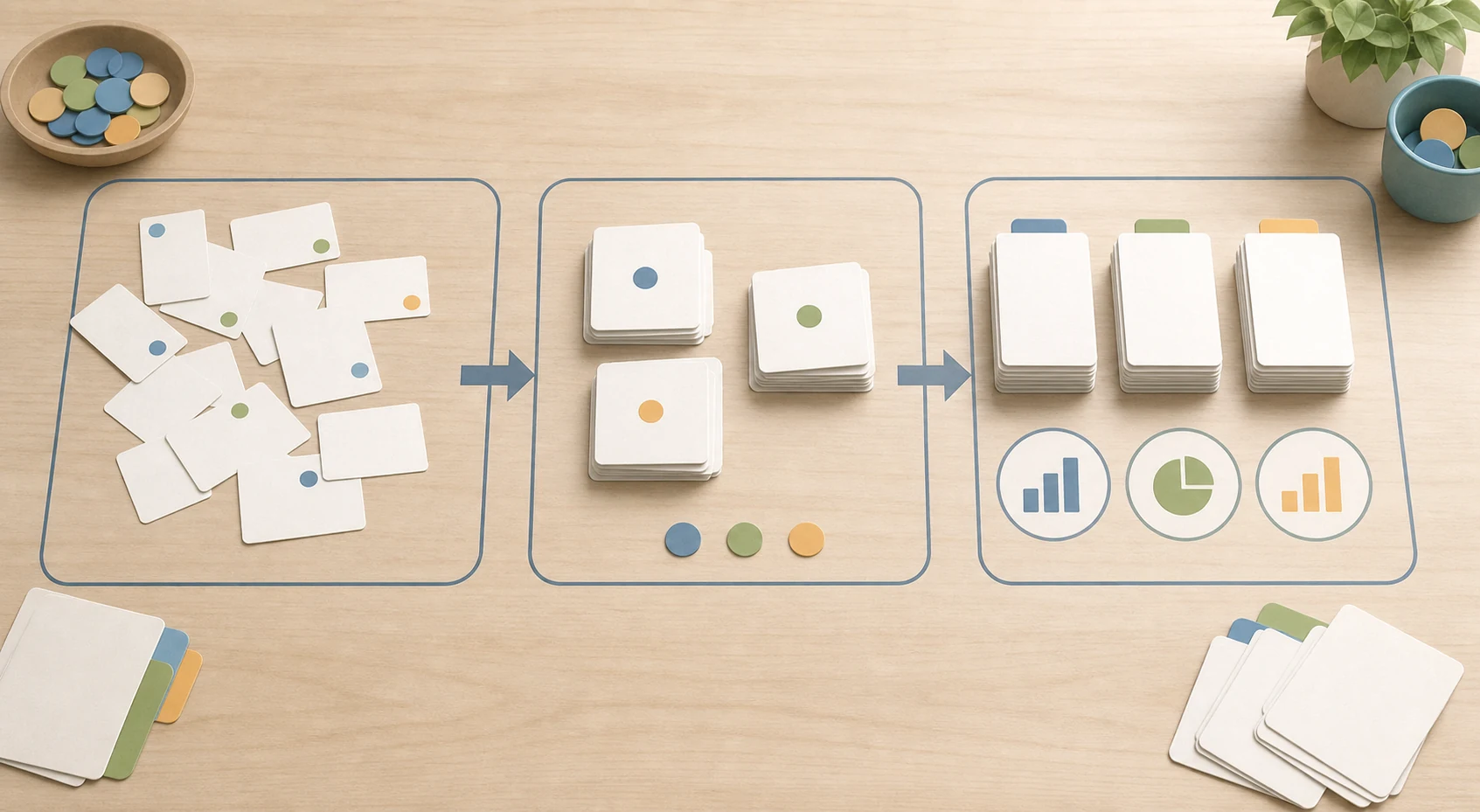
DASS-21 scoring is usually handled one subscale at a time. First, responses are grouped into depression, anxiety, and stress items. Second, the seven responses in each group are summed. Third, each subscale sum is multiplied by 2 so the score can be read using the conventional DASS severity ranges. Each final subscale can range from 0 to 42.
The commonly cited severity ranges for the doubled scores are:
| Severity label | Depression | Anxiety | Stress |
|---|---|---|---|
| Normal | 0-9 | 0-7 | 0-14 |
| Mild | 10-13 | 8-9 | 15-18 |
| Moderate | 14-20 | 10-14 | 19-25 |
| Severe | 21-27 | 15-19 | 26-33 |
| Extremely severe | 28+ | 20+ | 34+ |
These labels are best read as score bands, not as final judgments about a person. A high anxiety score, for example, means the anxiety-related item pattern was elevated during the timeframe being rated. It does not explain why, rule out other causes, or replace a broader conversation with a trained professional.
If you use a DASS-21 screening tool, the most useful mindset is to look for patterns. Is one subscale much higher than the others? Are all three elevated together? Does the score match what you have noticed in daily life? Those questions make the result more practical and less intimidating.
What the Three DASS-21 Subscales Mean
The depression subscale focuses on experiences such as low positive feeling, loss of interest, discouragement, and difficulty getting going. It is not a complete evaluation of mood, but it can highlight whether low-mood patterns were prominent during the past week.
The anxiety subscale focuses more on physiological arousal and fear-related experiences. These may include tension in the body, panic-like sensations, or strong anxious reactions in certain situations. A higher score suggests those anxiety-related experiences were more noticeable in the response period.
The stress subscale is about persistent tension, irritability, over-reactivity, impatience, and difficulty relaxing. This scale is narrower than every everyday meaning of "stress." People often use stress to describe workload, conflict, money pressure, or major life demands. The DASS stress scale is more specifically about the person's tension and arousal response.

Reading the subscales separately is usually more helpful than collapsing everything into one reaction. Two people can have the same overall level of distress but very different patterns. One may show more stress and tension; another may show more anxiety arousal; another may show elevated depression and stress together. The short form is useful because it keeps those three channels visible.
When a DASS-21 Assessment Is Useful
A DASS-21 assessment can be useful when someone wants a structured snapshot of recent emotional load. It can also support conversations with a counselor, doctor, therapist, or other qualified professional because it gives a concrete starting point: three scale scores, a timeframe, and a set of endorsed experiences.
It may be especially helpful when your own sense of how you are doing feels blurry. Instead of asking only "Am I okay?", the short form breaks the reflection into more specific areas. Have low interest and low energy become more frequent? Are anxiety sensations showing up more often? Is irritability or difficulty relaxing becoming harder to manage?
It is less useful when someone wants an instant explanation for complex symptoms, a crisis decision, or a single yes-or-no answer. If distress feels intense, safety is a concern, or daily functioning is being affected, a questionnaire should be treated as a prompt to seek human support, not as the final word.
How to Reference the DASS-21
If you are writing an academic paper, workplace document, or clinical note, the standard reference is usually the DASS manual by Lovibond and Lovibond: Lovibond, S. H., & Lovibond, P. F. (1995). Manual for the Depression Anxiety Stress Scales. 2nd edition. Sydney: Psychology Foundation.
If you are writing for a general audience, it is often enough to define the acronym clearly the first time: "The Depression Anxiety Stress Scales-21, or DASS-21, is a 21-item short form of the DASS." After that, use DASS-21 consistently.
Avoid implying that a score is a complete clinical assessment. Better wording is: "The DASS-21 is a self-report screening questionnaire that can help describe recent depression, anxiety, and stress symptoms." That phrasing keeps the tool useful without overstating what it can do.
How to Use a DASS 21 Short Form Result Carefully
The most useful next step after seeing a DASS 21 short form result is to slow down and interpret it in context. Start with the timeframe: the items refer to the past week, so a score may reflect a temporary period, a recent event, or a pattern that has been building. Then review the three scores separately instead of reacting only to the highest label.

You can ask a few grounded questions:
- What was happening during the week I rated?
- Do the scores match what I have noticed in sleep, work, relationships, study, or daily routines?
- Is one scale elevated, or are depression, anxiety, and stress all elevated together?
- Would it help to repeat the questionnaire later under similar conditions?
- Would sharing the pattern with a qualified professional make the next step clearer?
For low-pressure self-reflection, a structured DASS-21 reflection can be a starting point. Treat it as one piece of information alongside your lived context, not as a final answer. If the result worries you, if symptoms persist, or if you are struggling to function, it is sensible to speak with a qualified healthcare or mental health professional.
FAQ
What is the shorter version of DASS-21?
DASS-21 is already the shorter version. It is the 21-item short form of the original 42-item Depression Anxiety Stress Scales. Each of its three subscales has seven items.
What is the full form of DASS-21 scale?
DASS-21 stands for Depression Anxiety Stress Scales-21. The name refers to three related scales: depression, anxiety, and stress, measured through 21 self-report items.
Is DASS-21 still used?
Yes. DASS-21 is still widely used in research, screening contexts, education, and self-reflection because it is brief and separates depression, anxiety, and stress into three scores. Its results should still be interpreted with appropriate caution.
How is DASS 21 short form scoring done?
Responses are grouped by subscale, the seven items in each subscale are summed, and each subscale total is usually multiplied by 2. The doubled scores are then compared with conventional severity bands.
Is DASS-21 the same as a DASS-21 questionnaire PDF?
Not exactly. DASS-21 is the scale itself. A PDF, Word document, online form, or scoring template is only a format for administering or recording the same 21-item questionnaire.
Can DASS-21 scores be added into one total?
Some research contexts may use composite distress scores, but most everyday interpretation is clearer when depression, anxiety, and stress are reviewed separately. The three-score pattern is one of the main strengths of the short form.
Can I use DASS-21 for medical decisions?
DASS-21 can support self-reflection and discussion, but it should not be the only basis for decisions about care. If symptoms are intense, persistent, or affecting daily life, talk with a qualified healthcare or mental health professional.