DASS-21, PHQ-9, GAD-7: Mental Health Assessment Comparison
Navigating the world of mental health assessments can be complex. If you're looking to understand your emotional well-being or seeking a reliable screening tool, you've likely come across names like the DASS-21, PHQ-9, and GAD-7. This guide provides a clear, objective comparison of these widely used scales, helping you understand their unique focus and strengths. How do you choose the right mental health screening tool for you? By the end of this article, you'll be able to confidently choose the right self-assessment tool for your needs.
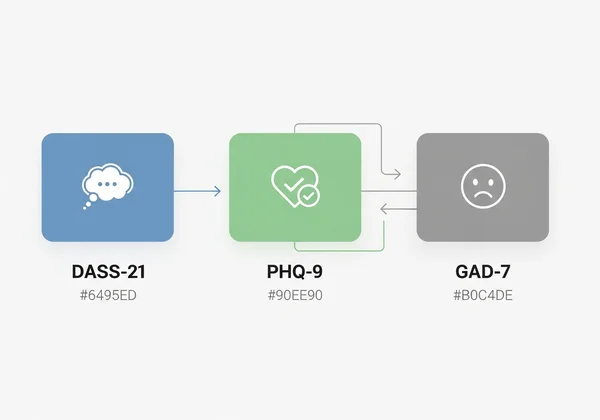
Understanding the DASS-21 Scale: Depression, Anxiety, Stress
The Depression, Anxiety, and Stress Scale (DASS-21) is a comprehensive tool designed to provide a multi-dimensional view of your emotional state. It stands out by not just measuring general distress but by differentiating between three distinct yet related negative emotional states. This makes it an incredibly insightful first step for anyone looking to gain clarity. For a direct experience, you can always try the free DASS-21 test.
What Does DASS-21 Measure, and Why is it Unique?
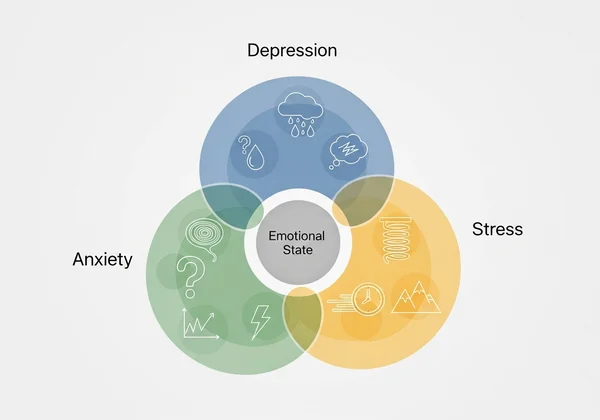
The DASS-21 questionnaire consists of 21 questions that ask you to rate your experiences over the past week. Its unique strength lies in its tripartite structure. It separates symptoms into three subscales:
- Depression: Measures symptoms like hopelessness, low self-esteem, and lack of interest or pleasure.
- Anxiety: Focuses on physiological arousal, situational anxiety, and the subjective experience of feeling anxious.
- Stress: Assesses symptoms like difficulty relaxing, nervous tension, irritability, and being easily agitated.
This separation is crucial because feelings of anxiety and stress can often be confused. The DASS-21 helps you see whether you're primarily experiencing physical tension and worry (anxiety) or a more general sense of being overwhelmed and irritable (stress).
How is the DASS-21 Scored and Interpreted?
After completing the assessment, you receive three separate scores for Depression, Anxiety, and Stress. Each score is then categorized into severity ratings, ranging from Normal to Extremely Severe. This immediate feedback provides a clear snapshot of your emotional well-being across different domains. The interpretation helps you identify specific areas that may need more attention, serving as a powerful tool for self-awareness before seeking professional advice.
PHQ-9: A Focused Lens on Depression Symptoms
The Patient Health Questionnaire-9 (PHQ-9) is a highly specific and widely used instrument for screening, monitoring, and measuring the severity of depression. Unlike the DASS-21, its focus is singular, making it a go-to tool for clinicians when depression is the primary concern.
Purpose and Structure of the PHQ-9
The PHQ-9 is comprised of nine questions that directly correspond to the nine diagnostic criteria for Major Depressive Disorder in the DSM-5. Respondents rate how often they have been bothered by each symptom over the last two weeks. Its purpose is to provide a quick, reliable measure of depressive symptoms, making it a standard in primary care and mental health settings.
Interpreting Your PHQ-9 Scores
Scores on the PHQ-9 are totaled to produce a single number, which corresponds to a severity level: minimal, mild, moderate, moderately severe, or severe depression. A higher score suggests a greater severity of depression. Clinicians use this score not only for initial screening but also to track a patient's response to treatment over time.
GAD-7: Pinpointing Generalized Anxiety Disorder
Similar to the PHQ-9's focus on depression, the Generalized Anxiety Disorder-7 (GAD-7) scale is a specialized tool designed specifically to screen for and measure the severity of generalized anxiety disorder. It is brief, effective, and commonly used in various medical and research settings.
The GAD-7 Questionnaire: What it Covers
The GAD-7 asks seven questions about how often, over the last two weeks, an individual has been bothered by common symptoms of anxiety. These include feeling nervous, not being able to stop worrying, and having trouble relaxing. It efficiently captures the core features of GAD, making it a powerful screener.
Understanding GAD-7 Severity Ratings
The total score from the GAD-7 is used to classify anxiety symptom severity as minimal, mild, moderate, or severe. Like the PHQ-9, it provides a clear numerical benchmark that can help individuals and their healthcare providers understand the extent of their anxiety symptoms and plan the next steps accordingly.
DASS-21 vs. PHQ-9 vs. GAD-7: Key Differences & Similarities
While all three tools are valuable self-report measures, their intended use and scope differ significantly. Choosing the right one depends entirely on your goal. Are you looking for a broad emotional check-up or do you need to screen for a specific condition?
Scope of Assessment: Uni-dimensional vs. Multi-dimensional
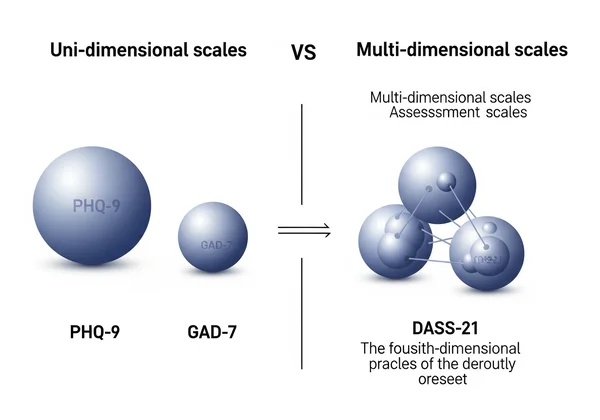
This is the most critical distinction. The PHQ-9 and GAD-7 are uni-dimensional, meaning they each measure a single construct: depression and anxiety, respectively.
The DASS-21, however, is multi-dimensional. It measures three related constructs simultaneously. This broader scope is excellent for initial self-assessment because our emotional experiences are rarely neat and tidy. The DASS-21 acknowledges this complexity, offering a more nuanced picture of your overall well-being. If you are unsure what you're feeling, a comprehensive self-assessment is the best place to start.
Target Population and Administration
The PHQ-9 and GAD-7 are heavily utilized in clinical settings as quick screeners to aid in diagnosis. They are designed to align closely with formal diagnostic criteria.
The DASS-21 is exceptionally well-suited for the general population, including students, professionals, and anyone interested in self-care. It serves as an educational and self-monitoring tool, helping individuals build emotional literacy without the clinical pressure. It's an empowering first step toward understanding oneself better.
When to Use Which Tool: Clinical vs. Self-Assessment
- Use PHQ-9 or GAD-7: When there is a specific concern about either depression or anxiety, often under the guidance of a healthcare professional. They are excellent for tracking symptoms of a known condition.
- Use DASS-21: When you want a general, comprehensive overview of your emotional health. It's the ideal choice if you feel "off" but can't pinpoint why, or if you suspect you're dealing with a mix of depression, anxiety, and stress.
Making Your Choice: Finding the Right Assessment Tool for You
Ultimately, the best tool is the one that aligns with your immediate needs. Each scale provides valuable information, but for general self-exploration, one clearly offers a more holistic view.
When DASS-21 is Your Best Option
If your goal is to conduct a private, quick, and comprehensive check-in with yourself, the DASS-21 is the superior choice. Its ability to parse the subtle differences between depression, anxiety, and stress provides insights that uni-dimensional scales cannot. It answers the question, "What am I feeling?" with greater detail, empowering you with knowledge. For an immediate and confidential overview, start your DASS-21 assessment on our platform.
The Importance of Professional Consultation
It is crucial to remember that the DASS-21, PHQ-9, and GAD-7 are screening tools, not diagnostic instruments. They provide valuable information and can highlight potential areas of concern, but they do not replace a formal diagnosis from a qualified mental health professional. Always discuss your results with a doctor, therapist, or counselor to get a complete picture and appropriate guidance.

Your Mental Health Journey: Taking the Next Step
Understanding your emotional state is key to managing your mental health. Tools like the DASS-21, PHQ-9, and GAD-7 offer clear ways to start that exploration. If you're looking for a broad, insightful, and accessible overview of your current depression, anxiety, and stress levels, the DASS-21 is an excellent place to begin.
Ready to gain a clearer understanding of your emotional well-being? Take a few minutes for yourself today. Complete your free DASS-21 test and receive your confidential results instantly.
Frequently Asked Questions About Mental Health Assessments
Is the DASS-21 a diagnostic tool like the PHQ-9 or GAD-7 can be?
No. It is essential to understand that the DASS-21 is strictly a screening tool. While the PHQ-9 and GAD-7 are often used by clinicians to help inform a diagnosis due to their alignment with DSM criteria, none of these self-assessments should be considered a standalone diagnosis. They are designed to measure symptom severity and indicate if further professional evaluation is warranted.
How reliable are these self-assessment scales for measuring mental health?
All three scales—DASS-21, PHQ-9, and GAD-7—are scientifically validated and have demonstrated high reliability and validity in numerous research studies. They are trusted instruments in both clinical and research settings. However, their accuracy depends on honest self-reporting. They are reliable for what they are designed to do: screen for symptoms and measure their severity.
Who is the DASS-21 primarily intended for compared to PHQ-9/GAD-7?
The DASS-21 is ideal for the general population for self-awareness and psychoeducation. It helps anyone understand the complex interplay of their negative emotions. The PHQ-9 and GAD-7 are more clinically oriented and are often used by healthcare providers to screen for specific disorders they already suspect may be present.
What should I do after taking any of these mental health assessments?
After taking an assessment, take time to reflect on the results. If your scores indicate moderate to severe symptoms, or if you are concerned about your mental health for any reason, it is strongly recommended that you schedule an appointment with a doctor or mental health professional. You can use your results as a starting point for that conversation. For a comprehensive overview, understand your DASS-21 scores and take the next step.