DASS-21 Age Range: Who It Is For and When to Use DASS-Y
The DASS-21 age range is usually the first practical question people ask after finding the Depression Anxiety Stress Scales-21. The short answer is that the adult DASS can be used from about age 14 when the person has typical language skills, while younger children are usually better matched with the DASS-Y, the youth version. That does not mean every 14-year-old will understand every item in the same way, or that every adult result should be read without context. If you want a private starting point for reflection, a free DASS-21 self-screening can help organize recent depression, anxiety, and stress experiences before you decide what to do next.
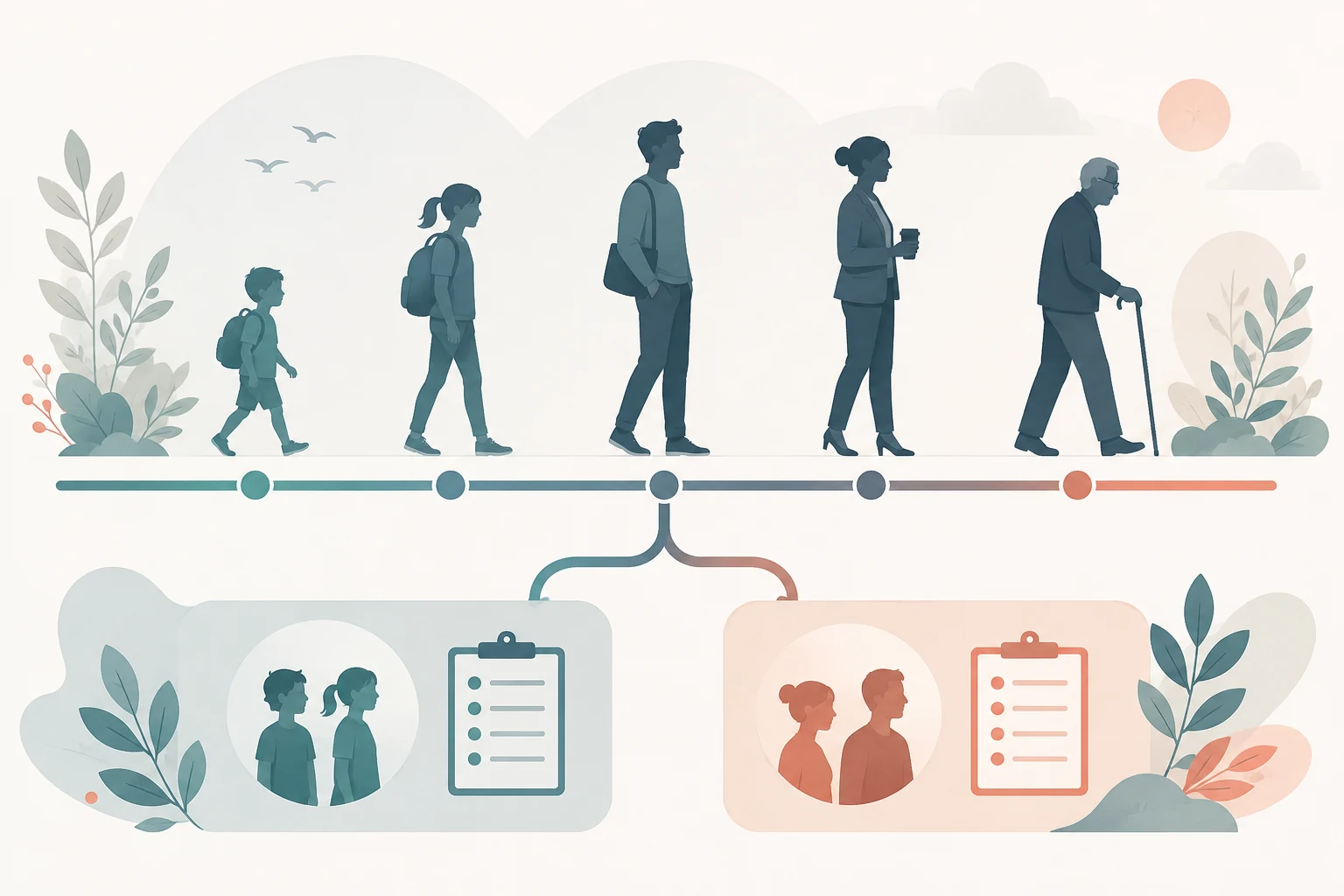
The Practical Age Rule for DASS-21
For everyday informational use, the most useful rule is simple: DASS-21 is generally treated as suitable from age 14 upward if the respondent can read and understand the wording in a typical way. Below that age, the youth version is the safer fit because it was written with children and adolescents in mind.
This age rule is about comprehension, not only birthdays. DASS-21 items ask people to rate recent emotional and physical experiences. A younger respondent may recognize some feelings but misunderstand wording, timeframe, intensity, or the difference between stress and anxiety. That can make scores harder to interpret.
Adults also need context. A DASS-21 score can be influenced by language familiarity, culture, physical illness, medication effects, current life stress, sleep, and whether someone answers quickly or carefully. The result is best read as a structured self-report snapshot, not a final answer about someone's mental health.
How DASS-Y Changes the Age Conversation
DASS-Y is the youth version of the DASS. Official DASS-Y guidance describes it as intended for children and adolescents aged 8-17, with simplified wording. That is why a search for "dass age range" often leads to two overlapping answers: DASS-21 from about 14 upward, and DASS-Y for younger respondents and adolescents.
The overlap matters. A 15- or 16-year-old may appear in research using DASS-21, but DASS-Y may still be easier to understand depending on reading level and setting. For younger children, especially those under 14, DASS-Y is usually the more appropriate starting point.
DASS-Y scoring and interpretation also differ in an important way. The adult DASS-21 has 21 items, seven for each subscale, and each raw subscale sum is commonly multiplied by 2 so it can be compared with the longer DASS-42 conventions. DASS-Y also has 21 items, but it is a standalone youth instrument. Its scores are not simply adult DASS-21 scores in easier language, and they should not be directly compared with adult DASS or DASS-21 score bands.
DASS-21, DASS-42, and the Age Question
DASS-42 is the original 42-item version. DASS-21 is the shorter 21-item form, with seven items each for depression, anxiety, and stress. The shorter version is often preferred when time matters, while the full version provides more items per scale.
Age does not change the basic structure of the adult DASS-21. A 19-year-old and a 45-year-old both answer the same 21 items and receive separate depression, anxiety, and stress subscale scores. What changes is how cautiously those scores should be interpreted. Many adult norms and validation studies focus on adults, university students, community samples, or specific research populations. Research has also studied adolescents, but adolescent results can show a stronger general distress factor and less separation among depression, anxiety, and stress than adult theory might imply.
That is why age range guidance should be read as a match between the tool and the user, not as a permission slip to overread the result. If a respondent is young, has lower literacy, is not comfortable with the language of the questionnaire, or is completing the scale in a school or family context, a youth-specific tool and qualified support may be more suitable.
How to Think About Scoring and Interpretation by Age
DASS-21 scoring and interpretation begin with three separate raw sums. The depression items are summed, the anxiety items are summed, and the stress items are summed. For the adult DASS-21, each subscale raw score is then multiplied by 2 before applying the conventional severity bands.
For adults and older adolescents with typical language skills, this process can give a useful map of recent emotional load. The key is to read the three subscales together. A high stress score with lower depression and anxiety scores may suggest a different recent pattern than high scores across all three areas. A high anxiety score may reflect physical arousal and fear-like symptoms during the past week, while stress items emphasize tension, irritability, and difficulty relaxing.
For younger people, the interpretation should be more cautious. A child's emotional vocabulary, development, sleep schedule, school environment, and family context can all shape responses. If DASS-Y is used, its scoring rules and youth cutoffs should be followed rather than adult DASS-21 bands. If DASS-21 is used with a teen, the result should be treated as one piece of information, especially if the score will inform school, family, or care decisions.
The same caution applies to searches for a Depression Anxiety and Stress Scale DASS-21 PDF. A form can be easy to download, but the PDF alone does not explain whether the version fits the respondent, whether scores need multiplying, or what the labels mean. The instrument is public domain, but interpretation still benefits from careful context.

Common Age-Range Mistakes to Avoid
One mistake is assuming "21" in DASS-21 refers to age. It does not. The number refers to the 21 questionnaire items.
Another mistake is treating DASS-21 as adult-only in every setting. Official guidance allows use down to age 14 with typical language skills, and research includes some adolescent samples. Adult DASS-21 interpretation is strongest when the respondent understands the wording and the comparison context fits.
A third mistake is mixing DASS-21 and DASS-Y scores. DASS-Y is not just DASS-21 with easier words. It has its own youth interpretation framework, and DASS-Y scores should not be doubled to match adult DASS-21 conventions.
A fourth mistake is reading severity labels as clinical categories. DASS labels describe score ranges on a dimensional scale. They are useful for communication, but they should not be treated as a substitute for a qualified mental health evaluation, especially when someone is distressed, unsafe, or having trouble functioning.
When an Online DASS-21 Check Makes Sense
An online DASS-21 check can be useful when an older teen or adult wants a structured way to reflect on the past week. It may help someone notice whether stress, anxiety, or depression-related experiences feel more prominent, and it can make a future support conversation more organized.
For adults, the DASS-21 result snapshot can be most helpful when used alongside notes about sleep, workload, relationships, health changes, and recent events. For a 14- to 17-year-old, it may be more appropriate as a conversation starter than a standalone answer. For children under 14, DASS-Y or another youth-appropriate measure is generally a better match.
If the person completing a scale is in crisis, feels unable to stay safe, or is experiencing major impairment, a questionnaire should not be the next step by itself. In those situations, contacting local emergency support, a qualified healthcare professional, or a trusted adult is more important than refining a score.
A Simple Decision Guide for Choosing DASS-21 or DASS-Y
Use DASS-21 when the person is 14 or older, can understand the wording, and the goal is adult-style screening of depression, anxiety, and stress over the past week. Use extra caution when the person is a younger teen, has limited language familiarity, or is completing the questionnaire in a high-stakes setting.
Use DASS-Y when the person is a child or adolescent in the youth range, especially under 14. It was designed with simplified wording and youth development in mind. It is also the better reference point when you specifically need DASS-Y scoring and interpretation.
Use professional guidance when scores are high, confusing, inconsistent with daily functioning, or connected with safety concerns. A score can point to what deserves attention, but it cannot explain the full story of a person's life, development, culture, health, or environment.
Use repeated self-checks cautiously. DASS-21 reflects the past week, so it can change as life changes. That can be useful for tracking patterns, but repeated scoring is most meaningful when the same version, timeframe, and interpretation rules are used each time.
Using the DASS-21 Age Range Safely
The safest way to remember the DASS-21 age range is this: adult DASS-21 is generally appropriate from about age 14 with typical language skills, while DASS-Y is designed for younger children and adolescents in the 8-17 range. Adults can use DASS-21 as a structured reflection tool, and teens may need more context, support, and care in interpretation.
For DASS-21.com, that distinction fits the site's purpose. The site can help visitors understand recent depression, anxiety, and stress patterns, but it should be used as an educational screening resource. If you are exploring your own recent emotional load, the online DASS-21 reflection tool can give you a private snapshot to review carefully, especially before deciding whether to discuss the result with a qualified professional.
FAQ
What is the main DASS-21 age range?
DASS-21 is generally used from age 14 upward when the person has typical language skills. For children below 14, the youth version, DASS-Y, is usually the better match. For adults, DASS-21 is widely used as a brief self-report screening measure for depression, anxiety, and stress.
What is the DASS-21 for children?
For children and younger adolescents, the relevant version is usually DASS-Y rather than adult DASS-21. DASS-Y uses simplified wording and is intended for ages 8-17. It should be scored with DASS-Y rules, not adult DASS-21 score conversion.
Is 21 a high score for anxiety?
It depends on whether 21 is a raw score or the final multiplied adult DASS-21 anxiety score. If 21 is the final adult DASS-21 anxiety subscale score, it falls in the extremely severe conventional band. If it is a raw seven-item anxiety sum, the converted score would be higher. Either way, a high score is a reason to seek appropriate support, not a complete explanation by itself.
What is a normal DASS-21 score?
Using adult DASS-21 conventional bands after multiplying each subscale by 2, the normal range is 0-9 for depression, 0-7 for anxiety, and 0-14 for stress. These are score ranges, not labels for a whole person, and they should be considered alongside current circumstances and functioning.
How do I interpret my DASS-21 score?
Read depression, anxiety, and stress separately, check whether the scores were multiplied correctly, and consider the past-week context. Look for patterns rather than one dramatic label. If a result worries you, or if symptoms are affecting daily life, discuss it with a qualified healthcare professional.
Does DASS-21 copyright stop people from using it?
The DASS questionnaires are public domain, so permission is generally not needed to use or copy them. The scales themselves should not be sold, and wording or scoring changes can make results harder to compare with established guidance. The manual and youth materials have their own usage details that should be checked before formal use.